
Jhwa Bahal (झ्वा बहाल) – Ratnaketu Mahavihar (रत्नकेतु महाविहार)
On this page
Introduction
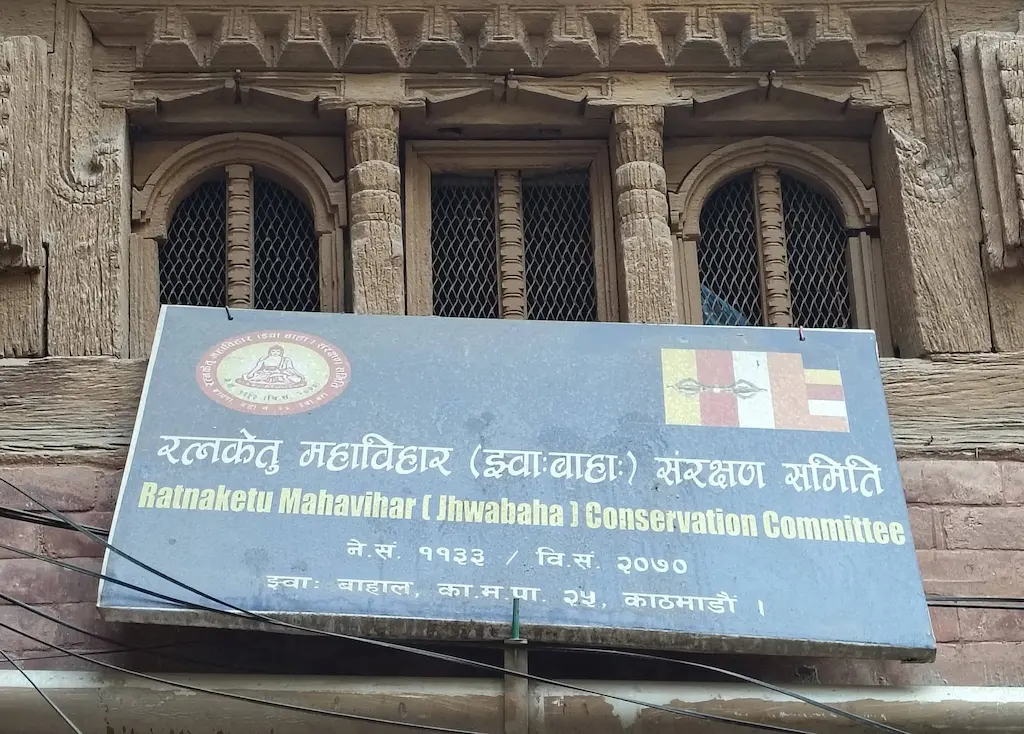
Jhwa Bahal (झ्वा बहाल), formally known by its Sanskrit name Ratnaketu Mahavihar (रत्नकेतु महाविहार), is a historic Newar Buddhist monastery on Kusumbiyalachi road in central Kathmandu ( See in Map ), a few blocks northeast of the Thahiti (ठहिटी) intersection. Thahiti is the landmark most people know, but the monastery itself stands on Kusumbiyalachi road. It stands second in the list of the eighteen Acharya Guthi bahals of the Kathmandu Valley, the eighteen main monasteries overseen by the Acharya Guthi (आचार्य गुथी), the body that governs the initiated Bajracharya (बज्राचार्य) priests of the city. Its Sanskrit name means jewel banner, from ratna (रत्न), a jewel, and ketu (केतु), a banner, and a well known local legend explains how the monastery came by it.
Second among the eighteen Acharya Guthi bahals of the Kathmandu Valley
The eighteen Acharya Guthi bahals of the Kathmandu Valley are spread across four traditional quarters of the old city: Thane Puin (थने पुइँ) or Uptown, Dathu Puin (दथु पुइँ) or Midtown, Layaku Puin (लायकू पुइँ) or Durbar Square, and Kwane Puin (क्वने पुइँ) or Downtown. Jhwa Bahal belongs to Thane Puin, the uptown quarter, and comes second in the list of eighteen, after Kwabahal (क्वाबहाल).
Both Bare Chuyegu (बरे छुयेगु) and Acha Luyegu (आचा लुयेगु) are performed at Jhwa Bahal. These are the two ceremonies that make a boy a monk and then a man a full Bajracharya priest, and they are held only at the main bahals.
The three courtyards
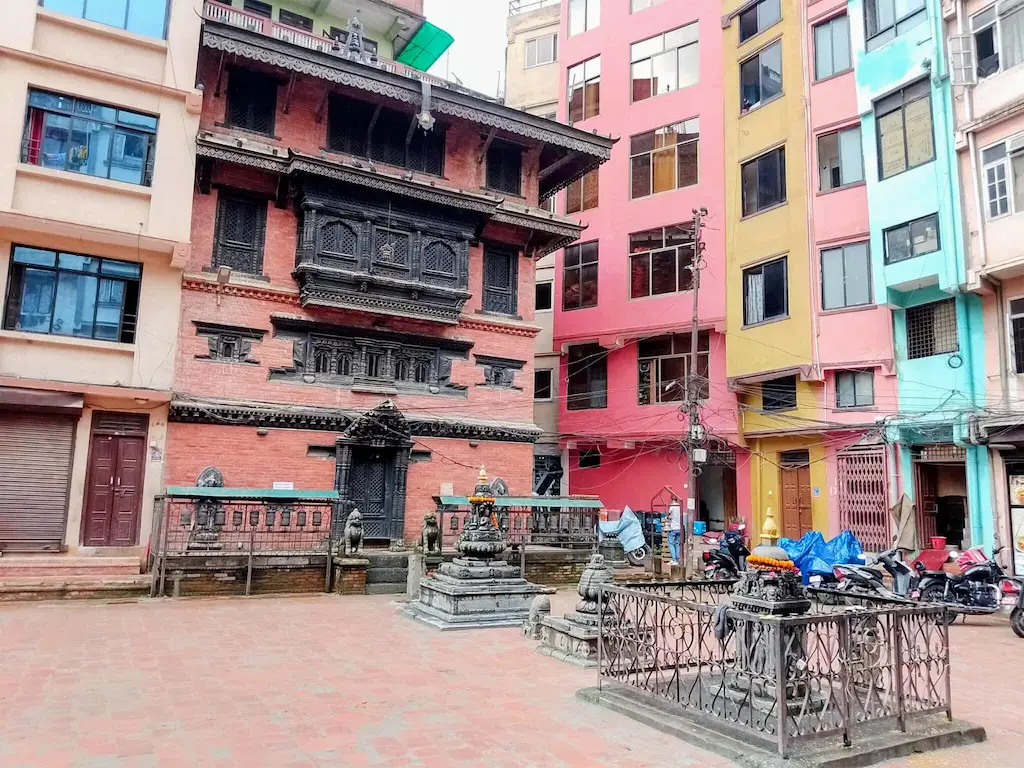
Jhwa Bahal is not a single building but a complex. It is made up of three walled courtyards in a row running east to west, with a fourth, smaller courtyard just north of the eastern one. This spread-out plan is unusual and is part of what makes the site worth visiting.
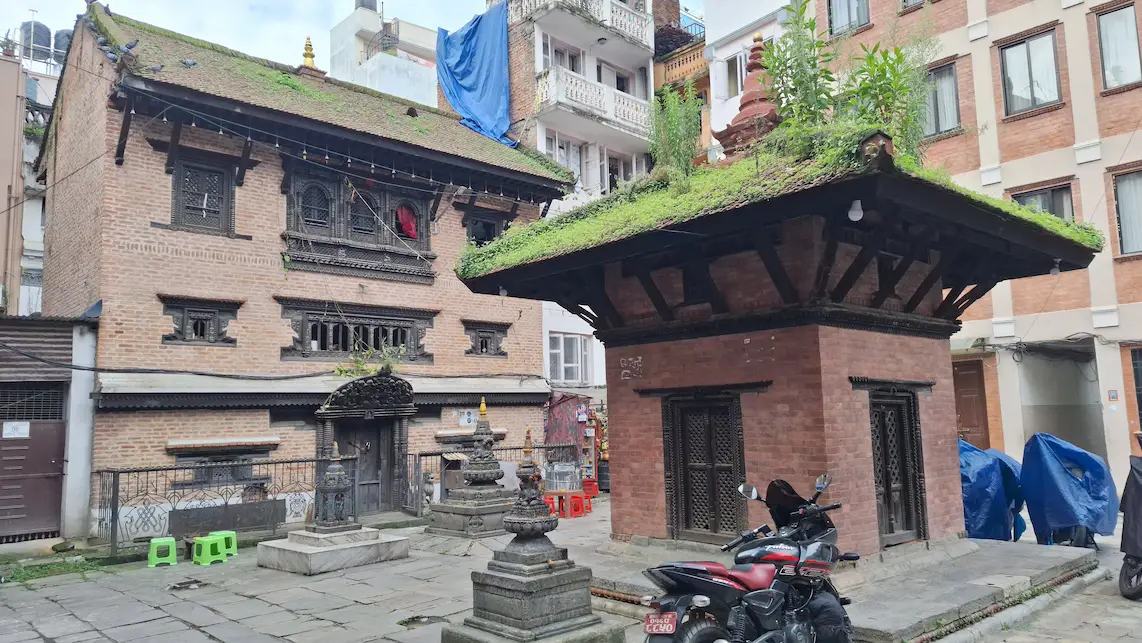
The central courtyard is the site of the original Jhwa Bahal. The shrine of the kwapa-dya (क्वापाःद्यः) , the monastery’s main image, stood along its northern side. Along the southern side is the original shrine of the agam-dya (आगम द्यः), the secret tantric deity of the monastery. Two votive chaityas (चैत्य) stand in the middle of this courtyard.
The western courtyard is the site of the present Jhwa Bahal, the building in use today.
The shrine and its main image
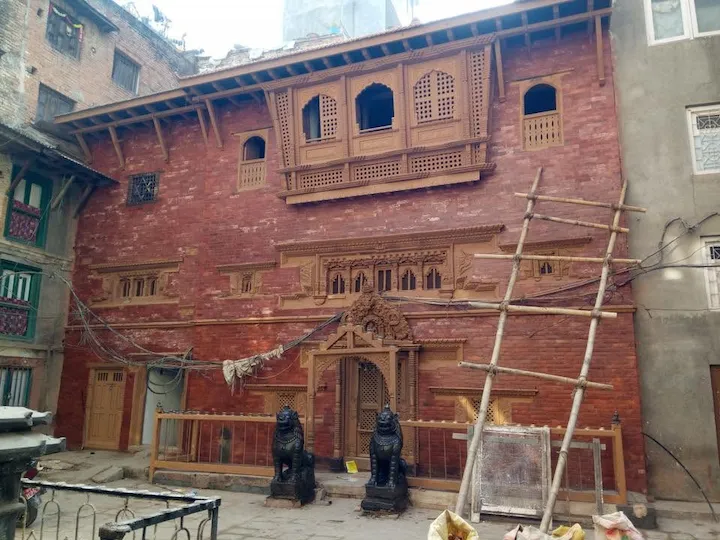
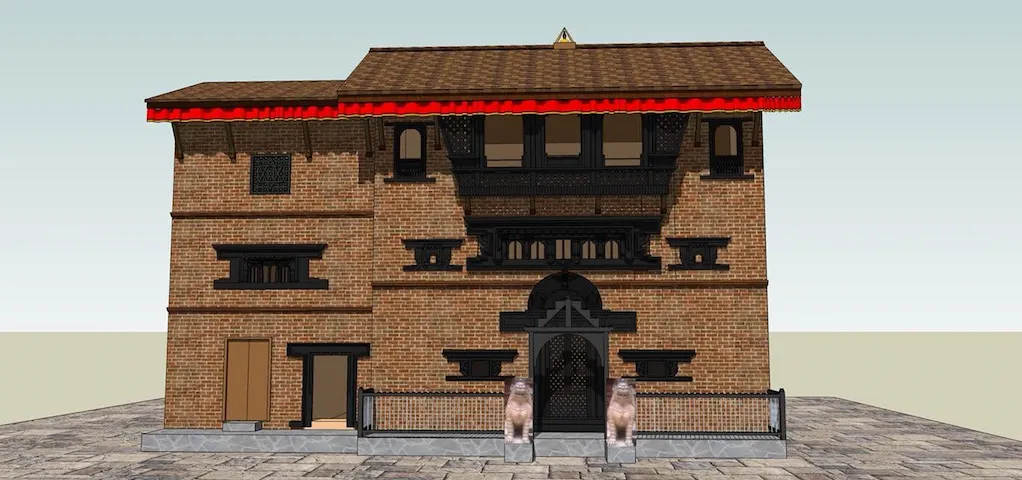
The entrance to the shrine of the kwapa-dya is on the southern side. It is marked by two stone lions and by an archway with oil lamps set into it.
The carved doorway is topped by a wooden torana (तोरण), the carved panel that sits above a doorway. This one shows the five transcendent Buddhas, with Vairocana (वैरोचन) in the central position. The main image inside is Akshobhya (अक्षोभ्य), facing north.
The first floor has the usual wide window with five openings, with a smaller window on each side. The front of the building is painted with wall paintings showing the five Buddhas and other Buddhist deities. Above that is an overhanging veranda faced in rough, unpainted wood, resting on carved wooden supports that show the puja-devis (पूजा देवी). A single chaitya stands in the courtyard.
The agam-dya and initiations
The agam-dya is now kept in a small room in the western courtyard, next to the present Jhwa Bahal, rather than in its original shrine on the south side of the central courtyard.
Acha Luyegu, the initiation that makes a man a full Bajracharya priest, is still performed at the original agam-dya shrine, as is Bare Chuyegu, the initiation that first brings a boy into the monastic community. A monastery where these two ceremonies are carried out is a working center of the priestly tradition, not simply an old building.
The Dya Chhen and the 2015 earthquake
The main Dya Chhen (द्यः छें), the house of the deity, was destroyed in the Nepal earthquake of 2015. Members of the community rebuilt it themselves. The work took three years and was completed in January 2018, so the Dya Chhen standing today is a recent rebuilding of a much older foundation.
The name and the legend of the jewel tree
The Sanskrit name Ratnaketu means jewel banner, and oral tradition ties it to a story about Lalit Bajra Bajracharya (ललित बज्र बज्राचार्य), who is remembered as the preceptor and founder of this bahal.
The story goes that Lalit Bajra Bajracharya grew a tree here that bore jewels instead of fruit. His descendants, however, failed to keep the precepts of the Buddha, and when they fell short the jewels all dropped from the tree to the ground. A second version of the story says he caused jewels to rain down from the sky. Either way, the jewels in the story and the jewel banner in the Sanskrit name belong together, and the name preserves the legend.
The written record
Little is recorded about the early history of Jhwa Bahal beyond oral tradition, and the complex holds no inscriptions or images of great age.
The earliest known mentions come from the colophons of two manuscripts, the notes that a scribe adds at the end of a copied text. Both speak of Jhwara Bahara, and they are dated Nepal Samvat (नेपाल संवत्) 773 and 776, which is about AD 1653 and 1656.
The earliest mention of the Sanskrit name comes from a manuscript dated N.S. 888, about AD 1768. It was written by a monk named Sakyamuni, who describes himself as living in Ratnaketu Mahavihar.
A note on sources and spelling
The description of the buildings and the courtyards draws on Buddhist Monasteries of Nepal by John K. Locke (1985).
Newar and Sanskrit words are written here in plain English letters without accent marks, with the Devanagari script given at first mention. The history in this article was made in a Sanskrit and Newar writing culture, and the original script carries meaning that plain English letters lose. Personal names and community words use the b spelling that local people use, as in Bajracharya, while Sanskrit religious terms and deity names keep the v spelling, as in Vairocana.
Nepal Samvat dates are turned into Common Era dates by adding about 880 years. The equivalents given above are approximate, because the Nepal Samvat year does not line up with the Western calendar year.
A short word list may help. A bahal (बहाल) is a Newar Buddhist monastery built around a courtyard, from the Sanskrit word vihara (विहार). Kwapa-dya (क्वापाःद्यः) is the main image of a bahal. Agam-dya (आगम द्यः) is the secret tantric deity kept in a closed shrine. A torana (तोरण) is the carved panel above a doorway. A chaitya (चैत्य) is a small stupa, a rounded shrine built as an offering. Dya Chhen (द्यः छें) is the house of the deity. A guthi (गुथी) is a trust that looks after a religious institution and its property.
Frequently asked questions
- What is Jhwa Bahal?
Jhwa Bahal (झ्वा बहाल) is a Newar Buddhist monastery in central Kathmandu. Its formal Sanskrit name is Ratnaketu Mahavihar (रत्नकेतु महाविहार), and it stands second in the list of the eighteen Acharya Guthi bahals of the Kathmandu Valley.
- Where is Jhwa Bahal located?
On Kusumbiyalachi road, a few blocks northeast of the Thahiti (ठहिटी) intersection in central Kathmandu. Thahiti is the landmark most people know, but the monastery itself is on Kusumbiyalachi.
- What does the name Ratnaketu mean?
Jewel banner, from the Sanskrit ratna (रत्न), a jewel, and ketu (केतु), a banner. The name comes from a local legend about a tree that bore jewels.
- What is the legend of the jewel tree?
Lalit Bajra Bajracharya (ललित बज्र बज्राचार्य), remembered as the preceptor and founder of the bahal, is said to have grown a tree here that bore jewels instead of fruit. When his descendants failed to keep the precepts of the Buddha, the jewels fell to the ground. Another version says he caused jewels to rain down from the sky.
- Who founded Jhwa Bahal?
Oral tradition names Lalit Bajra Bajracharya as its preceptor and founder.
- Why does Jhwa Bahal have three courtyards?
The complex is made up of three walled courtyards in a row running east to west, with a fourth smaller one just north of the eastern courtyard. The central courtyard holds the original bahal, and the western courtyard holds the building in use today.
- What initiations are held at Jhwa Bahal?
Both Bare Chuyegu (बरे छुयेगु) and Acha Luyegu (आचा लुयेगु), the ceremonies that make a boy a monk and then a man a full Bajracharya priest. Acha Luyegu is performed at the original agam-dya shrine.
- What is the main image in the shrine?
The kwapa-dya is Akshobhya (अक्षोभ्य), facing north. The carved doorway below it is topped by a wooden torana showing the five transcendent Buddhas, with Vairocana (वैरोचन) at the center.
- What happened to Jhwa Bahal in the 2015 earthquake?
The main Dya Chhen (द्यः छें), the house of the deity, was destroyed. Members of the community rebuilt it themselves over three years, and the work was completed in January 2018.
- How old is the written record of Jhwa Bahal?
The earliest known mentions come from the colophons of two manuscripts dated Nepal Samvat 773 and 776, about AD 1653 and 1656, which name the place as Jhwara Bahara. The Sanskrit name first appears in a manuscript of N.S. 888, about AD 1768.
Continue reading
Bahals and Mahavihars
Gam Bahal (गम बहाल) – Hemavarna Mahavihar (हेमवर्ण महाविहार)
Bahals and Mahavihars