
Gurumandala Puja: Most Significant Newar Buddhism Ritual: Step-by-step guide
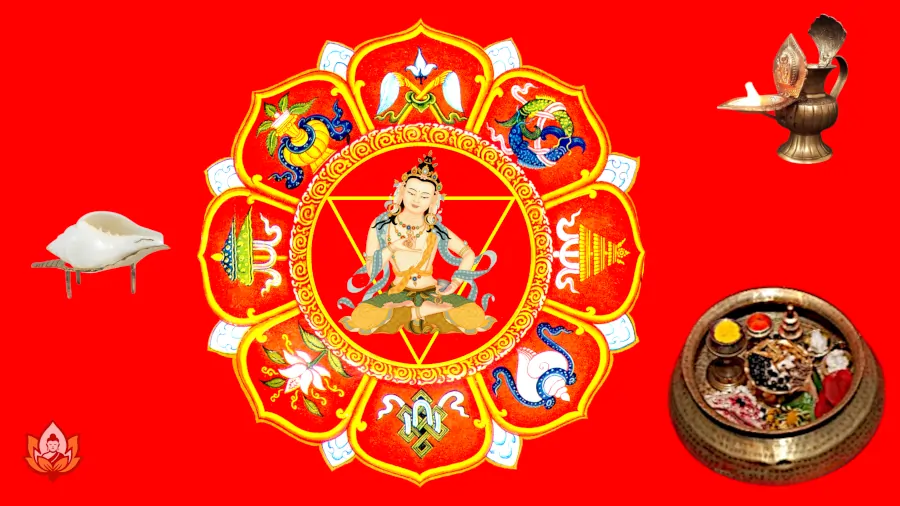
On this page
Introduction
Gurumandala Puja, in Sanskrit गुरुमण्डल पूजा, in Newari गुरु मण्ड: पूजा, also called “Guru-Mandala-Arcana” (गुरु-मण्डल-आर्चन), is one of the most widespread and significant rituals in Newar Buddhism in Nepal. Although its exact origins are unclear, it has been practiced for centuries by Bajracharya priests. Bajracharya priests not only perform the puja for themselves but also for their followers and the broader community. The Guru-Mandala-Arcana is a versatile ritual, observed during both joyous and sorrowful occasions, from birth to death. Whether at home, in cremation grounds, or other sacred places, it serves as the foundation for nearly every Newar Buddhist rite and life cycle ritual.
Note: Gurumandala ritual is very complex and can take about an hour to complete. If you are new to it, chanting the prayers in Sanskrit might take longer. Please take a look at Table of Contents above for overall Puja steps. For those seeking a quicker and simpler way to perform puja rituals, please refer to Panchopachara Puja (पञ्चौपचार पूजा) or 16-step detailed Bajracharya Puja .
Author’s Note: This is the first attempt to document the Gurumandala Puja in English, making it accessible for all generations to understand the rich Bajracharya culture.
The Meaning of Gurumandala (Guru-Mandala-Arcana)
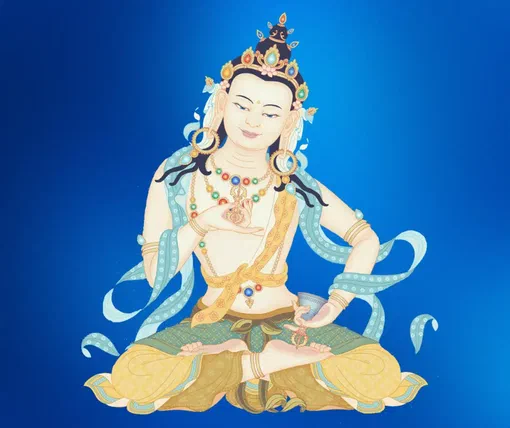
The term “Guru-Mandala-Arcana” (गुरु-मण्डल-आर्चन) is made up of three key words: Guru (गुरु), Mandala (मण्डल), and Arcana (आर्चन). In this context, Guru refers not just to a personal master, but to all Buddhist teachers, including the Buddhas, the Dharma (Buddha’s teachings), and the Sangha (the Buddhist community of monks, nuns, and priests). The main guru worshipped during the ritual is Vajrasattva, the supreme teacher of Bajracharya priests. Vajrasattva is often visualized as white, holding a vajra in his right hand and a bell (vajraghanta) in his left, seated in a meditative pose on a lotus flower.
Mandala symbolizes the circle of one’s body, speech, and mind, which are central to the ritual. Arcana means worship or sacrifice. Together, Guru-Mandala-Arcana signifies the offering of one’s body, speech, and mind to the collective wisdom of the Buddha, Dharma, Sangha, and Vajrasattva, with the ultimate goal of achieving enlightenment. This offering extends beyond just the teachers to include guardian deities as well. The ritual begins with a salutation to the Gurus and concludes with Dikpala or Lokapala Bali, the offering of sacrifices to the guardian deities. It includes various steps such as purifying the body, overcoming obstacles, discarding non-virtuous deeds and protecting oneself, all aimed at attaining spiritual awakening.
Essential Items for the Gurumandala Puja: What You Need
Before performing the Gurumandala Puja, certain utensils and offerings are required to ensure a smooth and meaningful ritual. Here is a breakdown of the items you’ll need:
Traditional Puja Utensils
- Puja Plate (पुजभ) – A plate to hold various offerings.

- Sina: Mu (सिन्ह:मू) – A container specifically for holding Sina or Tika

- Conch Shell (संख) – A sacred conch used during the ritual for offering water.

- Conch Shell Stand (मस) – A stand to hold the conch securely.

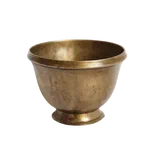
- Bowl for Samay Baji: Lapicha (लंपिचा) – A bowl to hold the Samay Baji (a traditional Newar food offering). Traditional bowl is called Lapicha (लंपिचा).
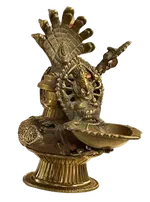
- Sukunda (सुकुन्दा) – A traditional oil lamp used in the puja.
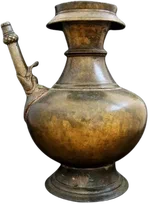
- Dhalacha (धालाचा) for Rice Wine (थ्वँ) – A container for offering rice wine.
- Small Brass Pitcher for Cow Milk – A small brass pitcher or any bowl to hold cow milk offering.

Offerings for the Puja
- Rice (Ashyata, अक्षता) – Symbolic grains of rice used in offerings.
- Incense (धुप) – For purifying the environment and invoking the deities.
- Yellow Sina (Tika) – A yellow powder used during the puja. Yellow sina is applied with the middle finger .
- Red Sina (Tika) – A red powder used in the ritual. Red sina is applied with the ring finger.
- Taya (ताये) – Taya refers to popped paddy rice, which are often offered to deities.
- Cotton String (Ita, इता) – Sacred threads used for burning fire/light.
- Jajanka (जजंका) – Jajanka refers to sacred cloth or fabric used in the ritual.
- Flowers – For offering to deities and symbolizing purity.
- Naivedya (Samay Baji) – A food offering that includes traditional Newar snacks.
- Cow Milk – A pure offering for the deities.
- Rice Wine (थ्वँ) – Offered as a drink for the gods.
- Fruits and Sweets – Additional food offerings symbolizing abundance and prosperity.
Miscellaneous
- Potash powder (stone powder) for Drawing the Mandala (पोताय्) – Potash is used to create the sacred mandala, a key element of the ritual.
- Goja (गोजा) – Rice cone. Made with Goja powder or wet puffed rice.

These items are essential to properly conduct the Gurumandala Puja, each with its own symbolic meaning and purpose in honoring the deities and guiding the practitioner toward spiritual fulfillment.
How to Draw a Simple Mandala for Gurumandala Puja
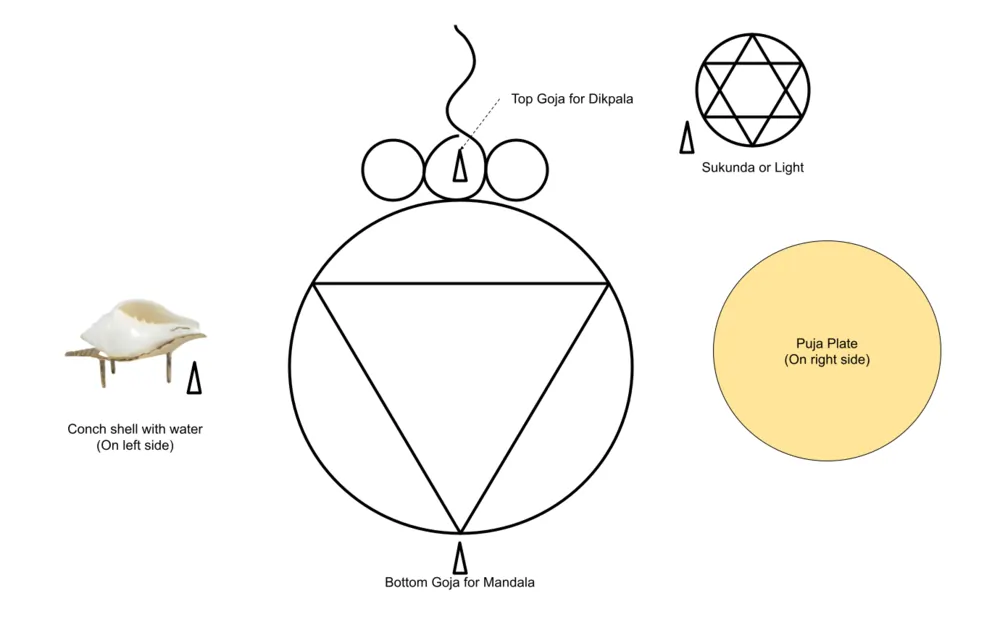
The mandala used in Gurumandala is also known as the Mount Meru Mandala. In Buddhist cosmology, Mount Meru is a sacred mountain regarded as the center of the physical, metaphysical, and spiritual universes.
Start by using white Potash powder (stone powder) to draw the Mandala. The design includes a main circle with a triangle in the center representing Mount Meru, where the deity Vajrasattva will be seated above. Above the main circle, there are three smaller circles, with the center one featuring a tail-like extension, which is represented by Top Goja (च्वये च्वंगु ग्वःजा, rice cone). This Top Goja represents the Dikpalas (8 directional deities) and protectors of all directions. This simple yet meaningful mandala forms the foundation for the Gurumandala ritual.
Steps to Perform the Gurumandala Ritual
1. Cleansing the Body, Mind, and Speech
Before starting the Gurumandala Puja, it is important for practitioners to cleanse their body (काय), mind (चित्त), and speech (वाक). This purification helps clear distractions and prepares a fresh, sacred space for the ritual.
i. Sprinkle water: नसला कायेगु
To begin, take water from the conch shell in the right hand and sprinkle it into the mouth three times while chanting the following mantra:
ॐ ह्रिं स्वाहा ॥
Om Hrim Swaha
(3 times)
ii. Purify body, speech and mind
Chant the following Sanskrit mantras to purify the body, speech, and mind:
काय विशोधने स्वाहा ।
Kaya Vishodhane Swaha
वाक विशोधने स्वाहा ।
Vak Vishodhane Swaha
चित्त विशोधने स्वाहा ।
Chitta Vishodhane Swaha
Meaning of the Sanskrit Mantras:
- Kaya Vishodhane Swaha
“I purify my body.” - Vak Vishodhane Swaha
“I purify my speech.” - Chitta Vishodhane Swaha
“I purify my mind.”
These mantras help cleanse the practitioner at a deeper level, ensuring that their body, words, and thoughts are purified before proceeding with the sacred puja.
2. Puja Samkalpa (संकल्प): Declaring the Purpose
This step is where the purpose of the Gurumandala Puja is clearly declared. Known as Samkalpa (संकल्प), this is the moment when the practitioner aligns their intention and devotion with the divine energies they are about to summon. The Samkalpa forms the spiritual foundation of the ritual, ensuring that it is guided by a focused and meaningful objective.
i. Burn Incense
Start by lighting incense in the puja plate. The rising smoke symbolizes the connection between the physical world and the divine, purifying the space and inviting positive energy.
ii. Declare location and names
Chant the prayer below to declare the location and the names of the individuals performing the Gurumandala, or the names of those on whose behalf the Gurumandala is being performed.
In Sanskrit:
| Chant Sanskit from this column | Meaning |
|---|---|
| अद्य श्रीमत् श्री शाक्यसिंह तथागतस्य बुद्ध क्षेत्रे | बुद्ध क्षेत्र |
| भद्रकल्पे | कल्प |
| भरत खण्डे | खण्ड |
| वैवश्वत मन्वन्तरे | मन्वन्तर |
| सत्य त्रेता द्वापर कलियुगे | युग |
| जम्बुद्वीपे | द्वीप |
| वासुकि क्षेत्रे | नाग भूमि |
| हिमवत पर्वत दक्षिण पार्श्वे | महापर्वत संकेत |
| आर्यावर्त पुण्यभूमि नेपाल देशे | देशया संकेत |
| वागमत्यां पश्चिम पार्श्वे शंकर नद्यां वायुव्य कोणे केशावत्यां पश्चिम कोणे | नदी नाला संकेत |
| गोपुच्छ गिरिवरो | पर्वतया संकेत |
| सुदुर्जया भूमिभागे | भूमि |
| उप-छन्दोह पीठे | पीठ |
| श्री हेरुक खगाननाधिवासिते | अधिवासिनी |
| श्री स्वयम्भू चैत्य सन्निधाने | |
| अनेक देव देवालय स्थाने | |
| कान्तिपुर महानगरे | महानगर |
| श्री [ मैत्रीपुर ] महाविहारे | विहार बहीया संकेत |
| [ क्वाबहल ] वस्थित | निवास स्थानया संकेत |
| [ नाम ] वज्राचार्य, [ नाम ] वज्राचार्य |
नाम, वंशज |
Note: Replace the Mahavihar name, city name, and people’s names with the appropriate Mahavihar, city, and individual names. This data is mainly for Kathmandu, Nepal origin individuals.
For everyone else: Please state your continent, country, city, Mahavihar, local neighborhood, and then your full name.
In English:
Adya Shrimat Shri Shakyasimha Tathagatasya Buddha Kshetre
Bhadrakalpe
Bharata Khande
Vaivasvata Manvantare
Satya Treta Dvapara Kaliyuge
Jambudwipe
Vasuki Kshetre
Himavat Parvata Dakshina Parshve
Aryavarta Punyabhumi Nepal Deshe
Vagamatyam Paschima Parshve Shankara Nadyam Vayuvya Kone Keshavatyam Paschima Kone
Gopuccha Girivaro
Sudurjaya Bhumibhage
Up-Chandhoh Pithe
Shri Heruka Khagananadhivasite
Shri Swayambhu Chaitya Sannidhane
Aneka Deva Devalaya Sthane
Kantipura Mahanagare
Shri [ Maitripur ] Mahavihare
[ Kwabahal ] Vasthit
[ Name ] Bajracharya, [ Name ] Bajracharya
Note: Replace the Mahavihar name, city name, and people’s names with the appropriate Mahavihar, city, and individual names. This data is mainly for Kathmandu, Nepal origin individuals.
For everyone else: Please state your continent, country, city, Mahavihar, local neighborhood, and then your full name.
Meaning:
Today, in the sacred realm of the Buddha Shakyasimha, during the fortunate Bhadrakalpa era, on the continent of Bharat in the Vaivasvata Manvantara, and within the four yugas (Satya, Treta, Dvapara, Kali), in the Jambudvipa island, at the site of Vasuki, south of the Himalayas, in the holy land of Aryavarta, located in Nepal. Specifically, on the western side of the Bagmati River, near the Shankara River, in the northwestern corner, at the peak of Gopuccha mountain, in the stronghold of Sudurjaya, within the Up-Chandhoh seat, and under the divine abode of Heruka. Near the Swayambhu stupa, surrounded by many temples, in the great city of Kantipur (Kathmandu), in the grand [ Maitripur ] Mahavihar monastery, in [ Kwabahal ], [Name] Bajracharya performs this sacred ritual.
iii. Declare Date and Time
In Sankrit
| क्रोधी नाम सम्वत्सरे | सम्वत् Example: Krodhi is sambat for 2024-2025 Check Wikipedia for more. |
|---|---|
| श्री सूर्य दक्षिणायने | सूर्य अयन |
| शरद ऋतु | ऋतु |
| कार्तिक मासे | महिना मास |
| शुक्ल पक्षे | पक्ष |
| प्रतिपदायां | तिथि |
| स्वाती | नक्षत्र |
| प्रीति | योग |
| बालव | करण |
| श्री सूर्य तुला राशि गते | सूर्य राशि |
| श्री चन्द्र तुला राशि गते | चन्द्र राशि |
| आदित्यवासरे | दिनवार |
| अस्मिन् शुभ दिने |
Note: If you’re unsure of the exact Sanskrit dates and tithi (lunar phases), simply mention the best known current date and time available.
In English:
Krodhi Nama Samvatsare
Shri Surya Dakshinayane
Sharad Ritu
Kartik Mase
Shukla Paksha
Pratipadayaam
Swati
Preeti
Balava
Shri Surya Tula Rashi Gate
Shri Chandra Tula Rashi Gate
Adityavasare
Asmin Shubha Dine
Note: If you’re unsure of the exact Sanskrit dates and tithi (lunar phases), simply mention the best known current date and time available.
Meaning:
This Sanskrit prayer is a declaration of the specific time and astrological conditions under which the ritual is being performed. It refers to the year (Krodhi), the Sun’s movement in the southern hemisphere (Dakshinayana), the season (Sharad or autumn), the month (Kartik), the lunar phase (Shukla Paksha, waxing moon), and the specific day (Pratipada). It also mentions the positions of the Sun (Tula Rashi – Libra) and the Moon (Tula Rashi – Libra) along with the day of the week (Adityavasare, Sunday). The prayer concludes by recognizing the current auspicious day (Shubha Dine).
iv. Prayer for Peace from the 9 Planets (Navagraha)
In Sanskrit:
आदित्य, सोम, मंगल, बुध, वृहष्पति, शुक्र, शनि, राहु एवं केतु नवग्रह दशा शान्ति कामनार्थं
In English:
Aditya, Soma, Mangala, Budha, Vrihaspati, Shukra, Shani, Rahu Evam Ketu Navagraha Dasha Shanti Kamanartham
Meaning:
This prayer is for seeking peace and relief from the negative effects of the nine celestial bodies (Navagraha): Sun (Aditya), Moon (Soma), Mars (Mangala), Mercury (Budha), Jupiter (Vrihaspati), Venus (Shukra), Saturn (Shani), Rahu, and Ketu. The goal is to calm their influences and bring harmony and balance into one’s life.
v. Prayer for Peace from 8 Yoginis
In Sanskrit:
मंगला, पिङ्गला, धान्या, भ्रामरी, भद्रिका, उल्का, सिद्धा, एवं शंङ्कटा आदि अष्ट योगिनी दशा निर्मूलार्थं
In English:
Mangala, Pingala, Dhanya, Bhramari, Bhadrika, Ulka, Siddha, evam Shankata adi ashta yogini dasa nirmoolartham.
Meaning:
This phrase references the eight yoginis—Mangala, Pingala, Dhanya, Bhramari, Bhadrika, Ulka, Siddha, and Shankata—who are invoked for the purpose of purification. These divine feminine energies are considered powerful forces that assist in removing obstacles and achieving spiritual clarity. By calling upon these yoginis, practitioners seek to eliminate negative influences and create a conducive environment for their spiritual practices.
vi. Prayer for Peace from the 12 Zodiac Signs
In Sanskrit:
मेष, वृष, मिथुन, कर्कट, सिंह, कन्या, तुला, वृश्चिक, धनु, मकर, कुम्भ तथा मीन आदि द्वादश राशि दशा शान्ति कामनार्थं
In English:
Mesh, Vrish, Mithun, Karkat, Singh, Kanya, Tula, Vrishchik, Dhanu, Makara, Kumbha, Tatha Meena Adi Dvadash Rashi Dasha Shanti Kamanartham
Meaning:
This text refers to the twelve zodiac signs: Aries, Taurus, Gemini, Cancer, Leo, Virgo, Libra, Scorpio, Sagittarius, Capricorn, Aquarius, and Pisces. It emphasizes their importance in seeking peace and fulfillment of desires. The phrase suggests that these astrological signs play a role in the quest for tranquility and positive outcomes in life.
vii. Prayer for Peace from the 27 Nakshatras (Constellations)
In Sanskrit
१. अश्विनी, २. भरणी, ३. कृतिका, ४. रोहिणी, ५. मृगशिरा, ६. आद्रा, ७. पुनर्वसु. ८. तिष्य, ९. अश्लेषा, १०. मघा, ११. पूर्व फाल्गुणी, १२. उत्तर फाल्गुणी, १३. हस्ता. १४. चित्रा, १५. स्वाती, १६. विशाखा, १७. अनुराधा, १८. जेष्ठा, १९. मूल, २०. पूर्वाषाढा, २१. उत्तराषाढा, २२. श्रवण, २३. धनिष्ठा, २४. शतभिषा, २५. पूर्व भाद्रपद, २६. उत्तर भाद्रपद, २७. रेवती
आदि सप्तविशति नक्षत्रादि अनुकूल कामनार्थे
In English
1. Ashwini, 2. Bharani, 3. Krittika, 4. Rohini, 5. Mrigashirsha, 6. Ardra, 7.Punarvasu, 8. Pushya, 9. Ashlesha, 10. Magha, 11. Purva Phalguni, 12. Uttara Phalguni, 13. Hasta, 14. Chitra, 15. Swati, 16. Vishakha, 17. Anuradha, 18. Jyeshtha, 19. Mula, 20. Purva Ashadha, 21. Uttara Ashadha, 22. Shravana, 23. Dhanishta, 24. Shatabhisha, 25. Purva Bhadrapada, 26. Uttara Bhadrapada and 27. Revati, Adi Sapta Vishati Nakshatradi Anukula Kamanaarthe
Meaning:
This list outlines the 27 Nakshatras, or lunar mansions, in Vedic astrology, which are considered significant for various aspects of life and spiritual pursuits. Each Nakshatra is associated with specific qualities, energies, and influences that can impact individual desires and aspirations. The phrase “आदि सप्त विशति नक्षत्रादि अनुकूल कामनार्थे” implies that these Nakshatras are favorable for achieving one’s desires and intentions.
viii. Prayer for Divine Success and Universal Peace
In Sanskrit
सकल कार्य सिद्ध कामनार्थे
मन्त्र सिद्धि लाभार्थे
वाक सिद्धि प्राप्त्यार्थे
देव, मनुष्य, राक्षस, यक्ष, किन्नर, प्रेत आदि षटगति उद्धार कामनार्थं
सकल सत्व जगत शान्ति कामनार्थं
In English
Sakala karya siddhi kamanarthe
Mantra siddhi labharthe
Vak siddhi praptyarthe
Deva, manushya, rakshasa, yaksha, kinnara, preta adi shatgati uddhara kamanartham
Sakala satva jagat shanti kamanartham
Meaning:
This prayer is a request for the fulfillment of all goals, the achievement of success through mantras, and the attainment of mastery in speech. It seeks the salvation of beings across the six realms, including gods, humans, demons, spirits, and more. The ultimate purpose of the prayer is to bring peace and tranquility to all living beings in the universe.
ix. Declare The Main Purpose of Gurumandala
There are various rituals that can involve the Gurumandala Puja. For example, during the Mha Puja ritual, the following should be declared:
In Sankrit:
मम इह दुर्लभ मनुष्य देह पूजा निमित्यर्थ
In English:
Mma iha durlabha manuṣya deha pūjā nimityartha
Meaning:
This phrase expresses the intention of offering worship in the context of having a rare human body. It highlights the importance of utilizing this unique opportunity for spiritual practice and devotion.
x. Concluding Declaration Of Purpose (संकल्प)
In Sanskrit:
ॐ नमो भगवते पुष्पकेतु राजाय तथागतायार्हते सम्यक्सम्बुद्धाय । तद्यथा । ॐ पुष्पे पुष्पे महापुष्पे सुपुष्पे पुष्पोदभवे पुष्पसंभवे पुष्पावकिरणे स्वाहा । इदं पुष्प धूप दीप गन्ध रस नैबेद्य संयुक्त पूजा भाण्डं संकल्पयाम्यहं ।
In English:
Om namo bhagavate pushpaketu rajaya tathagatayaarhate samyaksambuddhaya. Tadyatha. Om pushpe pushpe mahapushpe supushpe pushpodabhave pushpasambhave pushpavakiraney swaha. Idam pushpa dhup deepa gandha rasa naivedya sanyukta puja bhandam sankalpayami aham.
Meaning:
This prayer begins with a respectful salutation to the Buddha, acknowledging his enlightened state. The practitioner then calls upon the power of flowers, invoking various types of flowers to enhance the offering. The prayer continues by expressing the intention to offer flowers, incense, light, fragrance, and food (naivedya) as part of a combined ritual offering. It emphasizes the importance of dedicating these offerings to the divine with devotion and sincerity.
3. Guru Prayers (बन्दना): Honoring the Teacher
In this step, prayers are offered to the Guru, the spiritual guide, who embodies wisdom and guidance. The blessings of the Guru are vital for the success of the ritual, as they help align the practitioner’s mind and actions with spiritual principles. The prayer extends beyond the individual Guru, paying homage to all Buddhas and Gurus, including the Five Wisdom Tathagatas (Pancha Buddhas), and the Seven Buddhas: Vipaswi, Sikhi, Viswabhu, Krakucchanda, Kanakamuni, Kasyapa, and Shakyamuni. This reverence ensures that the practitioner receives divine blessings and insight throughout the ritual.
In Sankrit:
ॐ गुरुभ्यो नमः (3 times)
गुरुबुद्धः
गुरुधर्मं
गुरुसंघ तथैव च
गुरुवज्रधर श्चैव
तस्मै श्रीगुरुभ्यो नमः
समस्त गुरु आज्ञा ॥
In English:
Om Gurubhyo Namah (3 times)
Guru Buddha
Guru Dharma
Guru Sangha Tathaiva Cha
Guru Vajradhara Chaiva
Tasmai Shri Gurubhyo Namah
Samasta Guru Aagya
Meaning:
This prayer is an expression of deep reverence to the Guru in various forms. It honors the Buddha (the enlightened teacher), the Dharma (Buddha’s teachings), the Sangha (the community of monks and followers), and Vajradhara (the supreme holder of the vajra). The practitioner bows and offers respect to all Gurus, seeking their guidance and blessings for the ritual.
4. Conch Shell Puja
The conch shell, revered as a sacred object in many spiritual traditions, is purified during the Conch Shell Puja to transform it into a vessel of divine sound. This step is essential to prepare the conch for its role in calling the deities during the ritual. The purification process involves offering Sina (Tika), flowers, and rice to the conch, symbolizing its sanctification. Once the offerings are made, a mantra is chanted to invoke blessings, ensuring the conch is spiritually cleansed and ready for use in the puja.
In Sanskrit:
ॐ आः हूँ वं वज्रोदके हूँ स्वाहा ॥
यथा हि जातमात्रेण स्नापिताः सर्वतथागताः
तथाहं स्नापयिष्यामि शुद्धन्तु दिव्यन वारिणा
ॐ आ: हूँ सर्व्व तथागत अभिषेक समश्रिये हूँ ॥
In English:
Om Ah Hum Vam Vajrodake Hum Swaha
Yatha hi jatamatrena snapitah sarva tathagatah
Tathaham snapayishyami shuddhantu divyana varina
Om Ah Hum Sarva Tathagata Abhisheka Samashriye Hum
Meaning:
This mantra is a prayer for purification, symbolizing the act of cleansing the practitioner with divine water, just as all the Buddhas (Tathagatas) are bathed upon their birth. It expresses the desire for spiritual cleansing, invoking the power of sacred water to purify and make one worthy of receiving blessings from all Buddhas.
5. Purifying Puja Plate
The puja plate, which holds various offerings for the gods, is cleansed and purified. This step ensures that all tools used in the ritual are free from impurities.
In Sankrit:
ॐ सर्व्व विघ्नानुत्सारये हूँ ॥
In English:
Om Sarva Vighnanutsaraye Hum
Meaning:
This mantra is a powerful invocation to remove all obstacles. The word “Sarva” means “all,” and “Vighna” refers to “obstacles” or “hindrances.” The mantra calls upon divine forces to eliminate any barriers that may stand in the way of progress or spiritual practice. By chanting this, one seeks to clear the path for success and fulfillment in the ritual ahead.
Take water from the conch shell and sprinkle it onto the Puja Plate.
Then, touch the puja plate and perform the Samkalpa (संकल्प).
In Sankrit:
ॐ नमो भगवते पुष्पकेतु राजाय तथागतायार्हते सम्यकसम्बुद्धाय ॥ तद्यथा ॥
ॐ पुष्पे पुष्पे महापुष्पे सुपुष्पे पुष्पोद्भवे पुष्प संभवे पुष्पावकिरणे स्वाहा ॥
In English:
Om Namo Bhagavate Pushpaketu Rajaya Tathagataya Arhate Samyaksambuddhaya
Tadyatha
Om Pushpe Pushpe Mahapushpe Supushpe Pushpodbhave Pushpa Sambhave Pushpavakirane Swaha
Meaning:
This prayer is a tribute to the Buddha, who is referred to as Pushpaketu, the king of flowers. The chant invokes blessings by honoring the Buddha and focusing on the symbolism of flowers. The mantra calls for the manifestation and scattering of flowers, symbolizing beauty, purity, and the blossoming of spiritual awakening. It represents an offering of devotion and respect to the enlightened one, asking for blessings and spiritual growth.
6. Setting the Stage
In this crucial step, the practitioner prepares both physically and mentally to begin the puja. This is a grounding moment, ensuring that the practitioner is fully present and ready to embark on the spiritual journey ahead. The process involves specific postures, offerings, and mantras to create a sacred environment for the ritual.
i. Prepare the Heart
- Take a single flower in your hand and touch it to your heart. This symbolizes a connection between your inner self and the divine energies you are about to invoke.
- Place the flower on the mandala and chant the mantra three times:
- In Sankrit
ॐ आ हूँ (3 times) त्रिकायाधिष्ठानं - In English
Om Aa Hum (3 times) Trikayadhishthanam
- In Sankrit
ii. Sit in a Meditative Pose
- Sit cross-legged in a meditative position, centering your body and mind.
- Take another flower, place it on the mandala, and chant:
- In Sanskrit
ॐ आ हूँ तिष्ठ वज्रासने हूँ - In English
Om Aa Hum Tishtha Vajrasane Hum
- In Sanskrit
iii. Offer Flowers to the Left and Right
- Make offerings by placing flowers on both the left and right sides of the mandala.
- As you do this, chant:
- In Sankrit
ॐ सर्व्व पापानपनये है - In English
Om Sarva Papanapanaye Ha
- In Sankrit
iv. Chant the Pratishara (प्रतिसरा) Mantra
- To protect and purify the space, chant the Pratishaya mantra while offering a flower:
- In Sankrit
ओं मणि धणी वज्रिणी महाप्रतिसरे रक्षरक्ष मां हूँ हूँ फट फट् स्वाहा - In English
Om Mani Dhani Vajrini Mahapratisare Raksha Raksha Mam Hum Hum Phat Phat Swaha
- In Sankrit
v. Offer Yellow Sina (Tika)
- Apply yellow Sina (tika) to the mandala as an offering, and then place some on your forehead as a mark of spiritual connection.
- While doing this, chant:
- In Sankrit
ॐ वज्रतिलक भूषणे स्वाहा - In English
Om Vajratilaka Bhushane Swaha
- In Sankrit
These actions and mantras help the practitioner mentally focus, purify the space, and invite divine energies to bless the ritual. This step ensures that everything is in place for the sacred Gurumandala Puja to begin.
7. Mandala (मण्डल) Puja: Creating the Sacred Space
The Mandala Puja is an intricate and sacred ritual that marks the beginning of a central spiritual practice. In this puja, a mandala (मण्डल), a symbolic representation of the universe, is created. The mandala serves as a holy focal point, designed to summon divine energies and direct the devotee’s offerings to the cosmos. The act of creating a mandala is a powerful process that involves devotion, precision, and mindfulness. Through this sacred space, both the devotee and the divine energies connect harmoniously, invoking blessings and protection.
i. Offer Water to the Mandala
- Begin the process by offering water to the mandala. This act purifies the space and sets the tone for the ritual.
- As you offer the water, chant the following Sanskrit mantras:
- In Sanskrit:
ॐ वज्रोदके स्वाहा ।
ॐ वज्र गोमये स्वाहा ।
ॐ वज्ररेखे सुरेखे हूँ ॥
सर्वतथागत ।
अधिष्ठानाधिष्ठिते स्वाहा ॥ - In English:
Om Vajrodake Swaha
Om Vajra Gomaye Swaha
Om Vajra Rekhe Surekhe Hum
Sarvatathagata
Adhisthanadhishthite Swaha - Meaning:
The Sanskrit text serves as a series of invocations, calling upon the protective and purifying qualities of the Vajra, a symbol of strength and spiritual power in Buddhism. The first mantra, “Om Vajrodake Swaha,” requests the blessing of the water’s purity, while “Om Vajra Gomaye Swaha” asks for the strength of the earth. The phrase “Om Vajra Rekhe Surekhe Hum” invokes the solid and stable lines of the mandala. The mantra “Sarvatathagata” acknowledges the presence of all enlightened beings, and “Adhisthanadhishthite Swaha” calls for the blessings of the divine energy that supports the ritual. Together, these mantras create a sacred space, inviting spiritual protection and purity for the upcoming puja.
- In Sanskrit:
ii. Continuous Offerings of Rice, Flowers, and Water
- Next, continuously offer rice, flowers, and water to the mandala (जाकि स्वां लः तया मण्डलय हायेका तयेगु) while chanting the following mantra. This act symbolizes generosity and the invitation for divine energies to inhabit the mandala:
Sanskrit:
दानं गोमयमम्बुना च सहितं ।
शीलं च समार्ज्जनं ।
क्षान्तिं क्षुद्र पिपीलिका नपनयं ।
वीर्य्य क्रिया स्थापनं ।
ध्यानं तत्क्षणमेकचित्तकरणं ।
प्रज्ञा सुरेखोज्ज्वला ।
एताः पारमिता: षडेव लभते कृत्वा मुने र्मण्डलम् ॥
English:
dānaṃ gomayamambunā ca sahitaṃ
śīlaṃ ca samārjjanaṃ
kṣāntiṃ kṣudra pipīlikā napanayaṃ
vīryya kriyā sthāpanaṃ
dhyānaṃ tatkṣaṇamekacittakaraṇaṃ
prajñā surekhojjvalā
etāḥ pāramitāḥ ṣaḍeva labhate kṛtvā muner maṇḍalam
Meaning:
This verse emphasizes six paramitas (पारमिता) of Buddhism — generosity, morality, patience, energy, meditation, and wisdom, one can complete the mandala of the sage and move toward spiritual perfection. These virtues are essential to the path of enlightenment in Buddhist teachings.
iii. Blessings for Abundance and Purity
- Continue to chant, asking for blessings of prosperity and purification:
- In Sanskrit:
भवतु कनकवर्णः सर्व्वरोगैर्विमुक्तः सुरमनुजविशिष्टश्चन्द्रवद्दीप्तिकान्तिः ।
धनकनक समृद्धि र्जायते राजवंशे सुगतवर गृहेस्मिन्कायकर्माणि कृत्वा ।
ॐ मण्डल रेखे सुरेखे सर्व्वतथागत अधिष्ठानाधिष्टिते स्वाहा ॥
ॐ चन्द्रार्क विमले स्वाहा ॥ - In English:
Bhavatu Kanakavarnah Sarvarogair Vimuktah Suramanujavishishtah Chandravaddiptikantih
Dhanakanaka Samriddhi Jayate Rajavanshe Sugatavara Grihesmin Kayakarman Kritva
Om Mandala Rekhe Surekhe Sarvatathagata Adhisthanadhishthite Swaha
Om Chandraraksha Vimale Swaha - Meaning:
The Sanskrit text expresses a prayer for prosperity and well-being. It invokes blessings for a golden hue that symbolizes wealth and abundance, free from all ailments. The prayer also seeks the presence of esteemed celestial beings, shining like the moon, to grant prosperity and success within the royal lineage and in auspicious homes. The final lines emphasize the significance of the mandala as a sacred structure blessed by all enlightened beings and call for the purity of celestial bodies like the moon and sun to support the ritual.
- In Sanskrit:
iv. Final Flower Offering
To conclude the mandala puja, offer one last flower to the mandala while chanting the final mantra. This signifies the removal of obstacles and the invocation of Vajrasattva’s presence:
In Sanskrit:
ॐ वज्रसत्व सर्व्व विघ्नानुत्सारये हूँ ॥
In English:
Om Vajrasattva Sarva Vighnanutsaraye Hum
Meaning:
The mantra Om Vajrasattva Sarva Vighnanutsaraye Hum invokes Vajrasattva, the embodiment of spiritual power and purification. It expresses a heartfelt request for the removal of all obstacles and hindrances in one’s spiritual journey. By calling upon Vajrasattva, practitioners seek to clear the path to enlightenment and create a smooth transition in their spiritual practices. The chant symbolizes the desire for divine assistance in overcoming challenges and achieving spiritual clarity.
8. Summoning Vajrasattva: 22 Flower Offering (पुष्प न्यास)
In this key step, 22 pieces of flowers are offered to the mandala, while reciting 22 mantras to summon Vajrasattva, the enlightened being. This is one of the most important steps of Gurumandala Puja. Vajrasattva is visualized in a divine white form, holding a vajra in his right hand and a vajraghanta (bell) in his left, seated on a lotus flower.
Offer a flower while chanting each of the mantras below. For the 22 mantras, you should offer a total of 22 flowers.
- ॐ ह महामध्ये मेरवे नमः
Om Ha Mahamadhye Merave Namah
“Om, I bow to the great center of the mountain Meru.”
This invokes the sacred Mount Meru, considered the center of the universe in Buddhist cosmology. - ॐ ह्रीं मध्य मेरवे नमः
Om Hrim Madhya Merave Namah
“Om, I bow to the heart of Mount Meru.”
This emphasizes the central essence of Mount Meru, representing spiritual significance. - ॐ सूँ सूक्ष्म मध्य मेरवे नमः
Om Su Sukshma Madhya Merave Namah
“Om, I bow to the subtle center of Mount Meru.”
This acknowledges the subtle, inner dimensions of spiritual reality associated with Meru. - ॐ यं पूर्व विदेहाय नमः
Om Yam Purva Videhaya Namah
“Om, I bow to the eastern direction and the beings of Videha.”
This pays homage to the east and the enlightened beings in the Videha realm. - ॐ र जम्बुद्वीपाय नमः
Om Ra Jambudvīpay Namah
“Om, I bow to Jambudvipa, the land of humans.”
This acknowledges Jambudvipa, the continent where humans reside, symbolizing the material world. - ॐ लँ अपर गोदावरीयाय नमः
Om Lam Apar Godavariyay Namah
“Om, I bow to the river Godavari.”
This honors the sacred river Godavari, often seen as a purifying force. - ॐ वँ उत्तर कुरुवे नमः
Om Vam Uttara Kurave Namah
“Om, I bow to the northern Kurus.”
This recognizes the northern regions associated with spiritual significance. - ॐ या उप-द्वीपाय नमः
Om Ya Up-Dvīpay Namah
“Om, I bow to the sub-islands.”
This invokes the minor islands that represent different spiritual realms. - ॐ रा उप-द्वीपाय नमः
Om Ra Upa-Dvīpay Namah
“Om, I bow to the sub-islands.”
This line repeats the reverence for the minor islands, reinforcing their importance. - ॐ ला उप-द्वीपाय नमः
Om La Up-Dvīpay Namah
“Om, I bow to the sub-islands.”
Another acknowledgment of the sub-islands, adding layers to their spiritual significance. - ॐ वा उप-द्विपाय नमः
Om Va Up-Dvīpay Namah
“Om, I bow to the sub-islands.”
Continuing the theme, this further emphasizes the reverence for the minor islands. - ॐ यँ गज रत्नाय नमः
Om Yam Gaja Ratnay Namah
“Om, I bow to the jewel of the elephant.”
This symbolizes strength and wisdom, represented by the elephant as a powerful creature. - ॐ रँ पुरुष रत्नाय नमः
Om Ram Purusha Ratnay Namah
“Om, I bow to the jewel of the divine being.”
This honors the essence of the divine or spiritual essence of humans. - ॐ लँ अश्व रत्नाय नमः
Om Lam Ashva Ratnay Namah
“Om, I bow to the jewel of the horse.”
The horse represents nobility, power, and the ability to transcend obstacles. - ॐ वँ स्त्री रत्नाय नमः
Om Vam Stri Ratnay Namah
“Om, I bow to the jewel of the feminine.”
This honors the feminine aspect of divinity and the nurturing qualities associated with women. - ॐ या खड्ग रत्नाय नमः
Om Ya Khadga Ratnay Namah
“Om, I bow to the jewel of the sword.”
The sword represents protection, cutting through ignorance, and the power of wisdom. - ॐ रा मणि रत्नाय नमः
Om Ra Mani Ratnay Namah
“Om, I bow to the jewel of the gem.”
This acknowledges the preciousness of spiritual knowledge and wisdom. - ॐ ला चक्र रत्नाय नमः
Om La Chakra Ratnay Namah
“Om, I bow to the jewel of the wheel.”
The wheel symbolizes the cycle of life and the teachings of the Buddha, representing spiritual progress. - ॐ वा सर्व्वनिधानेभ्यो नमः
Om Va Sarvanidhane Bhyo Namah
“Om, I bow to all treasures.”
This expresses reverence for all forms of abundance and spiritual treasures available in the universe. - ॐ चँ चन्द्राय नमः
Om Cham Chandrāy Namah
“Om, I bow to the moon.”
The moon represents serenity, reflection, and the nurturing aspects of nature. - ॐ सुं सूर्याय नमः
Om Sum Suryāy Namah
“Om, I bow to the sun.”
The sun symbolizes illumination, energy, and life, representing divine radiance. - ॐ आः हूँ श्री वज्रसत्व गुरुभ्यो नमः
Om Aham Hum Shri Vajrasattva Gurubhyo Namah
“Om, I am, I hum, I bow to the revered Vajrasattva and all spiritual teachers.”
This final mantra affirms the practitioner’s identity with the divine, invoking Vajrasattva’s blessings and the guidance of all spiritual teachers.
9. Ratnamandala Offering (रत्नमण्डल): Worshipping Vajrasattva
First, start with the Panchopachara puja (five offerings), followed by the Ratnamandala puja to honor Vajrasattva.
i. Panchopachara Puja (पञ्चौपचार पूजा)
Panchopachara Puja, in Sanskrit पञ्चौपचार पूजा, is a traditional Buddhist worship ritual involving five offerings to the deity.
- Offer Sina or Tika
ॐ बज्रगन्धे स्वाहा ॥
Om Bajra Gandhe Swaha - Offer Flower
ॐ बज्रपुष्पे स्वाहा ॥
Om Bajra Pushpe Swaha - Offer Incense or Dhup
ॐ बज्रधूपे स्वाहा ॥
Om Bajra Dhupe Swaha - Offer Naivedya or Food
ॐ बज्रनैवेद्ये स्वाहा ॥
Om Bajra Naivedye Swaha - Offer Rice
ॐ बज्र लाजाय स्वाहा ॥
Om Bajra Laajaaya Swaha
For more details on Panchopachara Puja, click here .
ii. Ratnamandala Offering (रत्नमण्डल)
The Ratnamandala (रत्नमण्डल) offering represents a sacred cosmology in early Buddhism, symbolizing the universe with levels of air, fire, water, and islands in different directions. It includes mountains, jewels, and the sun and moon, making it a precious and holy representation. In Vajrayana Buddhism, offering the Ratnamandala to the Guru is a profound act of devotion and gratitude. It signifies honoring the Guru’s teachings and seeking further spiritual growth. This ritual is central to esoteric Buddhist practices, showing a disciple’s deep commitment to lifelong learning and dedication to Buddhist wisdom.
To offer the Ratnamandala, continuously offer rice, flowers, and water to the mandala (जाकि स्वां लः तया मण्डलय हायेका तयेगु) while chanting the mantra below.
In Sanskrit:
ॐ चतुरत्न मयं मेरु अष्टद्वीपोपशोभितं ।
नाना रत्न समाकीर्ण तदनुत्तरदायिने ॥
गुरुर्भ्यो बुद्ध धर्मेभ्यः संघेर्भ्योश्च तथैव च ।
निर्य्यातयामि भावेन संपूर्ण रत्न मण्डलम् ॥
In English:
Om Chaturratna Mayam Meru Ashtadvīpopashobhitam
Nana Ratna Samakīrna Tadanuttara Dayine
Gururbhyo Buddha Dharmebhyah Sangherbhyashcha Tathaiva Cha
Niryyatayami Bhavena Sampurna Ratna Mandalam
Meaning:
This mantra describes a grand, sacred mandala made of four precious jewels, symbolizing the Meru mountain, which is adorned with eight surrounding islands. The mandala is filled with various treasures, representing the highest and most supreme gifts. The chant acknowledges and pays homage to the Guru, Buddha, Dharma (Buddha’s teachings), and Sangha (community of practitioners). The practitioner expresses their intention to offer this fully adorned mandala of precious items with sincere devotion and a pure heart to the spiritual guides and the enlightened beings. The mandala serves as a symbol of spiritual abundance and generosity, seeking blessings in return.
10. Sevenfold Supreme Offering: Saptabidhanuttara Puja (सप्ताबिधनुत्तर पूजा)
This step involves making the Sevenfold Supreme Offering to Vajrasattva. The Sevenfold Supreme Offering, in Sanskrit सप्ताबिधनुत्तर पूजा (Saptabidhanuttara Puja) is a significant practice in Buddhism that encompasses various elements to cultivate spiritual growth and foster compassion. It consists of Puja (पूजा), which is the act of offering, where practitioners present their respects and devotion to the Buddhas and Bodhisattvas. This is followed by Vandana (बन्धना), a salutation to the Triple Gem—Buddha, Dharma, and Sangha—expressed through body, speech, and mind. Bodhichittotpada (बोधिचित्तोत्पाद) signifies the arising of the thought of enlightenment, reflecting the aspiration to achieve Buddhahood for the benefit of all beings. Anumodana (अनुमोदना) entails appreciation for the virtuous actions of oneself and others, while Papadesana (पापदेशना) involves confession of any unwholesome deeds, promoting purification and humility. Adhyesana (अध्येषणा) is the act of requesting guidance and support from the enlightened beings, fostering a connection with the spiritual lineage. Finally, Parinamana (परिणामना) involves dedicating the merits accrued from these practices to all sentient beings, ensuring that the benefits extend beyond oneself. Together, these seven components create a holistic framework for practitioners to cultivate merit, wisdom, and compassion, ultimately aiding in their journey toward enlightenment.
i. Puja (पूजा) : Offer 16 Steps Detailed Puja
Offer 16-step puja to Vajrasattva. This ritual reveals the deep meaning and purpose behind this complex ceremony. For more details and the associated mantras, click here .
- Offer Flower
- Burn Incense (Dhup)
- Keep rice (Akshyata) in hand, hold it together for Namaste, and once the mantra is completed, offer the rice to the deity or mandala (जाकि ज्वना विन्ति याये अले पूजा याये)
- Offer Water and Rice (धा: मण्ड:)
- Offer Sina or Tika (सिन्ह:)
- Offer Jajanka (जजंका)
- Offer Rice and Flower (जाकिं पूजा याना स्वाँ छाये)
- Offer Naivedya (Food)
- Offer Cow Milk (सादुरु)
- Offer Rice Wine (थ्वँ) – “Dhara/Dhala” (धारा/धाला)
- Offer Fruit and Sweets (फलफूल मह्रि चह्रि)
- Offer Light (मत बिये)
- Offer Fried Rice Grain “Taye” (ताये कया पूजा याये)
- Offer Rice, Water, and Flower (जाकि स्वाँ व ल: तया पूजा याये)
- Offer Rice and Money “Dakshina” (जाकि व दक्षिणा छाये)
- Pray 100 Syllables Vajrasattva Mantra and Offer Rice (शत्ताक्षर हवने जाकि पूजा याये)
For details on 16 steps puja and mantras, please click here .
ii. Vandana (बन्धना) : Offering Homage
Vandana (बन्धना), a salutation to the Triple Gem—Buddha, Dharma, and Sangha—expressed through body, speech, and mind.
- Take rice, flowers, and water, and offer them upward to the sky. Then chant mantra below.
Sankrit:
ॐ आ: हूं श्रीमद्वज्रसत्व गुरुवर चरण कमलस ।
सम्यकज्ञानावभासनकसय नमो हूँ ॥
नमोस्ते तुं नमो नमः ।
भक्त्या हं त्वांनमस्यामि श्री गुरुनाथ प्रसिद्धये ॥
English:
Om ā: huṁ śrīmadvajrasattva guruvara caraṇa kamalas
samyakjñānāvabhāsanakasaya namo huṁ
namoste tuṁ namo namaḥ
bhaktyā haṁ tvānamasyāmi śrī gurunātha prasiddhaye
Meaning:
The verse begins with an invocation to the Vajrasattva, representing the embodiment of enlightenment and compassion. The phrase “Om ā: huṁ” signifies the essence of meditation and spiritual practice. The speaker pays homage to the lotus feet of the revered teacher, emphasizing respect and devotion. The line “samyak jñānāvabhāsanakasaya” expresses a wish for the realization of profound knowledge and clarity. Following this, the repetition of “namaste” and “namo namah” reflects deep reverence and humility towards the divine. The final part, “bhaktyā haṁ tvānamasyāmi,” signifies the practitioner’s heartfelt bowing to the guru, acknowledging the significance of their guidance and wisdom. Overall, this prayer encapsulates an attitude of devotion, surrender, and the aspiration for spiritual illumination through the blessings of the guru. - Hold the rice in your palm, perform a Namaste gesture, and chant the mantra below.
Sankrit:
यस्य प्रसाद किरणै स्फरितात्मतत्व
रत्नप्रभा प्रतिकर प्रहतान्धकारा
पश्यन्तुनाविरदृशैः सविरासमुचै
स्तस्मै नमः कृतिरियं गुरु भाष्कराय
English:
yasya prasāda kiraṇai spharitātmatatva
ratnaprabha pratikara prahatāndhakārā
paśyantunāviradṛśaiḥ savirāsamucai
tasmai namaḥ kṛtirayaṃ guru bhāskarāya
Meaning:
This verse pays homage to the Guru, likening them to the sun (bhāskarāya) who dispels the darkness of ignorance. The phrase “yasya prasāda” refers to the grace of the Guru, which shines like rays of light, illuminating the essence of all beings (spharitātmatatva). The metaphor of “ratnaprabha” signifies the brilliance and radiance of wisdom, which serves to counteract the dense darkness (prihatāndhakārā) that veils understanding. The verse encourages one to observe the world with clarity and insight (paśyantunāviradṛśaiḥ) and acknowledges the collective wisdom present in all beings (savirāsamucai). Ultimately, it expresses deep reverence and gratitude towards the Guru for their enlightening presence and guidance on the spiritual path. - Again hold the rice in your palm, perform a Namaste gesture, and chant Tri-Ratna mantra below.
Sanskrit:
ॐ नमो बुद्धाय गुरुवे
नमो धर्म्माय तारणे
नमः संघाय महस्तमेत्रिभ्यो अपि सततं नमः
सर्व्व बुद्धं नमस्यामि धर्म्मञ्च जिन भाषितं
संघञ्च शील सम्पन्न रत्नत्रयं नमस्तुते
रत्न त्रयं मे शरणं
अनुमोदे जगत पुण्य
बुद्ध बोधौ दधे मनः
आबोधौ शरणं यामि
बुद्धधर्म्म गणोत्तम
English:
Om Namo Buddhaya Gurave
Namo Dharmmaya Taarane
Namah Sanghaaya Mahastameetribhyo Api Satatam Namah
Sarva Buddham Namasyami Dharmanch Jina Bhashitam
Sanghanch Sheila Sampanna Ratnatrayam Namastute
Ratna Trayam Me Sharanam
Anumode Jagat Punyan
Buddha Bodhau Dadhe Manah
Abodhau Sharanam Yami
Buddhadharma Ganottama
Meaning:
This passage is a devotional chant that expresses profound respect and reverence towards the Buddha, Dharma, and Sangha, collectively known as the Triple Gem. It begins with the invocation “Om Namo Buddhaya Gurave,” which means “Homage to the Buddha and the Guru,” acknowledging the central figures in Buddhist teachings. The prayer emphasizes gratitude towards the Dharma, the teachings that guide practitioners towards liberation, and the Sangha, the community of monks and lay followers who support one another on their spiritual paths. The line “Sarva Buddham Namasyami” signifies respect towards all Buddhas and their teachings. Furthermore, it speaks of dedicating the merits of one’s virtuous actions for the benefit of all beings, highlighting the importance of altruism in Buddhism. By seeking refuge in the “Ratna Trayam” or “Three Jewels,” practitioners aspire to cultivate wisdom and compassion, ultimately striving for enlightenment and the well-being of all sentient beings.
iii. Bodhichittotpada (बोधिचित्तोत्पाद) – Arising the thought of Enlightenment
Bodhichittotpada (बोधिचित्तोत्पाद) signifies the arising of the thought of enlightenment, reflecting the aspiration to achieve Buddhahood for the benefit of all beings.
Sanskrit:
बोधिचित्तं करोम्येष
स्वपरार्थ प्रसिद्धये
उत्पादयामि परमं बरबोधिचित्तं
निमन्त्रयामि अहूँ सर्व्व सत्वान्
इष्टाञ्चरिष्ये वरबोधि चारिका
बुद्धो भवेयं जगतो हिताय
English:
Bodhi-cittaṁ karomy-eṣa
Sva-parārtha prasiddhaye
Utpadayāmi paramaṁ bara-bodhi-cittaṁ
Nimāntrayāmi ahaṁ sarva-sattvān
Iṣṭāñ-charishy-e vara-bodhi chārikā
Buddho bhaveyaṁ jagato hitāya
Meaning:
In this verse, the practitioner expresses their intention to cultivate Bodhicitta, the awakened mind or the aspiration to attain enlightenment for the benefit of all sentient beings. They proclaim their dedication to this noble goal, emphasizing that their purpose is to bring about personal benefit while simultaneously uplifting others. By nurturing the ultimate form of Bodhicitta, they invite all sentient beings to partake in this journey towards enlightenment. The practitioner resolves to engage in actions that lead to the realization of supreme Bodhicitta, aspiring to be a Buddha for the welfare of the world. This reflects the essence of Buddhism, where the path to enlightenment is intrinsically linked to the compassion and well-being of all beings.
iv. Anumodana (अनुमोदना) – Appreciation
Anumodana (अनुमोदना) entails appreciation for the virtuous actions of oneself and others.
Sanskrit:
देशनां सर्व्वपापानां पुण्यानां चानुमोदनां
कृतोप्रवासं चरिष्यामि आर्याष्टांगमपोषधं
English:
Desanām sarva-pāpānām puṇyānām ca anumodanām
Kṛtopravāsaṃ cariṣyāmi āryāṣṭāṅgamapoṣadhaṃ
Meaning:
This verse expresses two key aspects. First, it highlights the Anumodana (अनुमोदना) aspect, which is the act of rejoicing or appreciating the good deeds (puṇyāni) and merits of oneself and others. In this context, it conveys the sentiment of joy in recognizing virtuous actions. Secondly, it touches upon the intent to observe and practice the Ārya-Aṣṭāṅga Poṣadha—the eightfold noble path, which is the ethical and spiritual framework central to Buddhist teachings. This implies a dedication to personal transformation by following the path of virtue, purification, and mindfulness. Together, the verse acknowledges past wrongdoings, celebrates positive deeds, and affirms the intention to walk the noble path as part of one’s spiritual discipline.
v. Papadesana (पापदेशना) – Confession
Papadesana (पापदेशना) involves confession of any unwholesome deeds, promoting purification and humility.
Sanskrit:
मया बालेन मूढे किञ्चित पापमार्ज्जितं
प्रकृत्या वद्य शावद्य प्रज्ञप्त्या वद्यमेव च
तद त्र्यं देशयाम्येष नाथामग्रतस्थित
कृताञ्जली दुःखभीत प्रणिपत्य पुनः पुनः
अत्ययमत्ययं तेन प्रतिगृन्हन्तु नायकाः
न भद्रकमिदं नाथ न कर्त्तव्यं पुनर्म्मया
English:
Mayā bālena mūḍhe kiñcit pāpamārjjitaṁ
Prakṛtyā vadya śāvadya prajñaptyā vadyameva ca
Tad tryaṁ deśayāmyeṣa nāthāmagratasthita
Kṛtāñjalī duḥkhabhīta praṇipatya punaḥ punaḥ
Atyayam-atyayaṁ tena pratigṛhṇantu nāyakāḥ
Na bhadrakamidaṁ nātha na karttavyaṁ punarmmayā
Meaning:
In this passage, the speaker humbly confesses their past wrongdoings, recognizing that these actions were born out of ignorance and immaturity. They acknowledge their sinful deeds, both those committed by nature and by intention. The speaker expresses deep remorse and repeatedly bows before the enlightened beings (Nāthas) with folded hands, seeking forgiveness out of fear of suffering. They implore the enlightened beings to accept their confession of transgressions, vowing not to repeat such harmful actions in the future. This reflects the core of Papadesana (पापदेशना)—the confession and atonement for one’s past mistakes, with a sincere resolve to avoid them in the future.
vi. Adhyesana (अध्येषणा) – Requesting
Adhyesana (अध्येषणा) is the act of requesting guidance and support from the enlightened beings, fostering a connection with the spiritual lineage.
Sanskrit:
यथा ते तथागता आर्य्याअर्हन्ते सम्यक्संबुद्धो बुद्ध ज्ञानेन बुद्ध चक्षुषा जानन्ति पश्यन्ति यत्कुशल मूलं ॥
English:
Yathā te tathāgatā āryyārhante samyaksambuddho buddha jñānena buddha cakṣuṣā jānanti paśyanti yat kuśala mūlaṃ
Meaning:
This verse is a respectful acknowledgment of the enlightened beings, the Tathagatas, the noble Arhats, and the fully awakened Buddhas, who through their perfect wisdom (Buddha-jñāna) and divine vision (Buddha-cakṣus) know and see the root of all virtuous deeds. In the context of Adhyeṣana (Requesting), the practitioner is humbly requesting these enlightened beings to use their profound wisdom and insight to guide and inspire the practitioner’s own spiritual journey. It is an appeal for the enlightened ones to help recognize and cultivate the “root of virtue” (kuśala mūla), which leads to the purification of the mind and ultimately to enlightenment. This prayer reflects a desire for spiritual guidance, support, and wisdom to stay on the path of virtue and enlightenment.
vii. Parinamana (परिणामना) – Dedicating the Merit
Parinamana (परिणामना) involves dedicating the merits accrued from these practices to all sentient beings, ensuring that the benefits extend beyond oneself.
Sanskrit:
यज्जातिकं यः निकाय यः स्वभावं यलक्षणं यया धर्म्म तया संविद्यते ।
तथाहं अनुमोदे यथातेभ्यो अनु जानन्ति तत्कुशल मूलं अनुत्तराया सम्यक्संम्बोधौ तथा अहं परिणामयामि ।
तथा ममानेन समाधि कालं लोकस्य दुःखंच सुखोदयंच हर्त्तुञ्च कर्त्तुञ्च सदास्तुशक्ति तमः प्रकासं यथैव भानो ।
दृष्टश्रुतोअनुस्मृति मागतोवा ।
पृथक्का योग मुपाशकोवा ।
सर्व्व प्रकारं जगतो हिताय ।
न्ह्यागु प्रकार यानानं सदा सर्व्वकालं संसार सत्व प्राणी उद्धार याये ।
कुर्य्याम्य जश्रं सुख संहिताय ॥
English:
Yajjātikaṃ yaḥ nikāya yaḥ svabhāvaṃ yalakṣaṇaṃ yayā dharmma tayā saṃvidyate |
tathāhaṃ anumode yathātebhyo anu jānanti tatkuśala mūlaṃ anuttarāyā samyaksaṃbodhau tathā ahaṃ pariṇāmayāmi |
tathā mamānena samādhi kālaṃ lokasya duḥkhaṃca sukhodayāṃca harttuṃca karttuṃca sadāstuśakti tamaḥ prakāsaṃ yathaiva bhāno |
dṛṣṭaśrutoanusmṛti māgatovā |
pṛthakkā yoga mupāśakovā |
sarvvaprakāraṃ jagato hitāya |
nhyāgu prakāra yānānāṃ sadā sarvvakālaṃ saṃsāra satva prāṇī uddhāra yāye | kuryyāmy aśraṃ sukha saṃhitāya ||
Meaning:
This verse is dedicated to Parinamana, the act of dedicating the merit accumulated through virtuous actions for the benefit of all beings. The passage expresses that regardless of one’s birth, group, nature, or characteristics, the true essence of dharma is universally accessible. The speaker rejoices in the virtues of others and commits to directing this shared merit toward the supreme enlightenment (Samyak Sambodhi). It calls for one’s meditative practice to not only bring personal liberation from suffering but also the welfare and upliftment of all beings. The imagery of dispelling darkness with the brilliance of the sun emphasizes the transformative power of wisdom and compassion. This merit is dedicated toward alleviating the world’s suffering, bringing happiness, and helping sentient beings escape the cycle of samsara. The speaker vows to continue these efforts, ensuring the well-being and ultimate liberation of all sentient beings through selfless actions.
11. Bali Puja (बलि पूजा): Sacrificing the Self
Bali Puja, or the Sacrificing of the Self, in Sanksrit बलि पूजा, is a significant ritual in Vajrayana Buddhism where offerings are made to various deities and protectors. “Bali” refers to the oblation or offering, often a symbolic portion of one’s daily meal. In this sacred practice, it extends to the offering of one’s own sensual organs and their respective objects of desire, signifying the surrender of worldly attachments. The ritual honors the 8 Dikpalas – Indra, Yama, Kuvera, Varuna, Agni, Vayu, Isana (Shiva), and Nairrati (God of Goblins), who are the guardians of the eight directions. Additionally, Brahma, Vishnu, Sun, Moon, the serpent deity (Nāg Dev), all Yakshas (nature spirits), Asuras (demons), and the protectors of all directions are invoked during the Bali Puja, symbolizing the offering and sacrifice to all divine forces for spiritual protection and growth.
In Bali Puja, the Goja placed at the Top (च्वये च्वंगु ग्वःजा) of the Mandala is worshipped, and this is also known as the Amrit Kundali. In the context of Buddhism, Amrit Kundali refers to a sacred vessel of immortal nectar or divine elixir, symbolizing the purification of the body, speech, and mind. It represents the attainment of immortality and spiritual awakening through the consumption of this nectar, often linked to the deeper rituals of transformation and enlightenment in Tantric (technical) Buddhism practices. The Amrit Kundali is revered as a source of eternal life and wisdom.
i. Start with Offering Water to Amrit Kundali
Offer water to Amrit Kundali, i.e. Top Goja and chant mantra below.
Sanskrit:
ॐ ह्रीँ आचमनं प्रोक्षमणं प्रतीच्छ स्वाहा
English:
Om hrīṁ ācamanam prokṣamaṇam pratīccha svāhā
Meaning:
This mantra is an invocation used during rituals, primarily focused on purification. “Om” is the sacred universal sound, and “Hrīṁ” is a powerful seed (bīja) mantra that symbolizes purity, compassion, and the divine feminine energy. “Ācamanam” refers to the act of internal purification through sipping water, while “Prokṣamaṇam” means sprinkling or purifying by water externally. “Pratīccha” means “accept,” and “Svāhā” is a traditional term used at the end of mantras to signify the completion of an offering or invocation. This mantra seeks to purify both internally and externally, invoking the divine to accept the offering of this cleansing process.
ii. Chant Composition of Amrit Kundali
Sanskrit:
प्रथमं शुन्यतानंत्तरं ।
ततो यं कारेण वायु मण्डलं ।
तदुपरि रं कारेण अग्नि मण्डलं ।
लं कारण आप मण्डलं ।
तदुपरि आकारेण मुण्ड त्रितय चुरिकोपरि शुक्ल पद्मभाञ्जनं ॥
English:
prathamaṁ śunyatānantaram
tato yaṁ kāreṇa vāyu maṇḍalaṁ
tad upari raṁ kāreṇa agni maṇḍalaṁ
laṁ kāraṇa āpa maṇḍalaṁ
tad upari ākāreṇa muṇḍa tritaya curiko pari śukla padmabhāñjanaṁ
Meaning:
The Sanskrit text presents a structured process for creating various elemental maṇḍalas in a ritualistic context, beginning with the state of emptiness (śunyatā). It sequentially describes the establishment of the air (vāyu) maṇḍala, followed by the fire (agni) maṇḍala, and finally the water (āpa) maṇḍala, each formed through specific sound (kāraṇa) vibrations. The text culminates in the formation of a pure white lotus (śukla padmabhāñjana) positioned above these elemental structures. This arrangement symbolizes the interconnectedness of the elements and highlights the importance of balance and harmony in spiritual practices, emphasizing the transformative power of rituals that lead from emptiness to the manifestation of divine qualities.
iii. Ten-Syllable Mantra (दशाक्षर मन्त्र): Garuda Mudra (गरुड मुद्र)
The दशाक्षर मन्त्र (Dashakshara Mantra) in Buddhism is a ten-syllable powerful mantra that holds great significance in various practices. In the context of Bajracharya Buddhism, it also appears in the form associated with Garuda, the mythological bird and protector. Garuda is a deity who symbolizes protection against obstacles, diseases, and harmful influences, especially those related to Nāga (serpentine beings) and negative energies.
- First chant Mantra below
Sanskrit:
तत्र भक्तादि परिपूरितं
आद्यंत सपूर्ण पात्र शोधन मन्त्र
English:
tatra bhaktādi paripūritaṁ
ādyaṁta sapūrṇa pātra śodhana mantra
Meaning:
This Sanskrit phrase describes a purification mantra that is completely filled with devotion and other qualities from the beginning to the end. It emphasizes the importance of the mantra in purifying a vessel or container, indicating that both the ritual and the intention behind it are crucial for achieving spiritual purity. The phrase highlights the idea that when a vessel is filled with devotion, it becomes a worthy instrument for the sacred act of purification, ensuring that the spiritual significance of the ritual is fully realized. - While chanting the ten-syllable mantra (in Sanskrit दशाक्षर मन्त्र) below, touch each finger on both hands.
Sanskrit:
बुँ आँ जिं खँ हूँ
लाँ माँ पाँ ताँ वँ
English:
Buṁ āṁ jiṁ khaṁ hūṁ
āṁ māṁ pāṁ tāṁ vaṁ - Show Garuda Mudra (Pose) with your hands and chant mantra below.
Sanskrit:
फें फें फें
English:
Phe Phe Phe
iv. Offer 16 Flowers to Dikpalas and other Directional Dieties
Offering sixteen flowers to the eight guardians of the directions – Indra, Yama, Kubera, Varuna, Agni, Vayu, Ishana, and Nairrati, along with Brahma, Vishnu, Sun, Moon, the serpent deity (Nāg Dev), all Yakshas (nature spirits), Asuras (demons), and the protectors of all directions.
- Offer flower toward your right shoulder and chant mantra below
Sanskrit:
ॐ इन्द्राय स्वाहा
English:
Om Indrāya Svāhā
Meaning:
Offering to ruler of the east, God Indra - Offer flower toward your left shoulder and chant mantra below
Sanskrit:
ॐ यमाय स्वाहा
English:
Om Yamāya Svāhā
Meaning:
Offering to ruler of the south, God Yama - Offer flower toward your right shoulder and chant mantra below
Sanskrit:
ॐ वरुणाय स्वाहा
English:
Om Varuṇāya Svāhā
Meaning:
Offering to ruler of the west, God Varun - Offer flower toward your left shoulder and chant mantra below
Sanskrit:
ॐ कुवेराय स्वाहा
English:
Om Kuverāya Svāhā
Meaning:
Offering to ruler of the north, God Kuvera - Offer flower toward your right shoulder and chant mantra below
Sanskrit:
ॐ अग्निय स्वाहा
English:
Om Agniya Svāhā
Meaning:
Offering to ruler of the south-east, God Agni - Offer flower toward your left shoulder and chant mantra below
Sanskrit:
ॐ नैऋत्य स्वाहा
English:
Om Nairṛtya Svāhā
Meaning:
Offering to ruler of the south-west, God Nairrtya - Offer flower toward your right shoulder and chant mantra below
Sanskrit:
ॐ वायुवे स्वाहा
English:
Om Vāyuve Svāhā
Meaning:
Offering to ruler of the north-west, God Vayu - Offer flower toward your left shoulder and chant mantra below
Sanskrit:
ॐ इशानाय स्वाहा
English:
Om Iśānāya Svāhā
Meaning:
Offering to ruler of the north-east, God Mahadev Shiva - Offer flower toward your top (च्वय्) and chant mantra below
Sanskrit:
ॐ उर्द्ध ब्रम्हणे स्वाहा
English:
Om Urdhva Brahmaṇe Svāhā
Meaning:
Offering to ruler of the Urdhva Brahman, God Brahma - Offer flower toward your down (क्वय्) and chant mantra below
Sanskrit:
ॐ अर्द्ध ब्रम्हणे स्वाहा
English:
Om Ardha Brahmaṇe Svāhā
Meaning:
Offering to ruler of the Ardha Brahman (Half Universe), God Vishnu - Offer flower on Top Goja and chant mantra below
Sanskrit:
ॐ सूर्य्या ग्रहाधिपतये स्वाहा
English:
Om Surya Grahādhipataye Svāhā
Meaning:
Offering to lord of all Graha (planets), God Sun - Offer flower on Top Goja and chant mantra below
Sanskrit:
ॐ चन्द्रा नक्षत्राधिपतये स्वाहा
English:
Om Chandra Nakṣatrādhipataye Svāhā
Meaning:
Offering to lord of all Nakshatra (constellations), God Moon - Offer flower on Top Goja and chant mantra below
Sanskrit:
ॐ नागेभ्यः स्वाहा
English:
Om Nāgebhyaḥ Svāhā
Meaning:
Offering to all Nagas (serpients) - Offer flower on Top Goja and chant mantra below
Sanskrit:
ॐ यक्षेभ्य स्वाहा
English:
Om Yakṣebhyaḥ Svāhā
Meaning:
Offering to all Yaksas (nature spirits) - Offer flower on Top Goja and chant mantra below
Sanskrit:
ॐ असुरेभ्यः स्वाहा
English:
Om Asurebhyaḥ Svāhā
Meaning:
Offering to all Asuras (demons) - Offer flower on Top Goja and chant mantra below
Sanskrit:
ॐ सर्व्व दिग्विदिग्दश दिग्लोकपालेभ्यः स्वाहा
English:
Om Sarva Digvidigdaśa Diglokapālebhyaḥ Svāhā
Meaning:
Offering to all the guardians of the ten directions and their realms.
v. Offer Panchopachara Puja (पञ्चौपचार पूजा) to Amrit Kundali
Offer Panchopachara Puja, in Sanskrit पञ्चौपचार पूजा, a traditional Buddhist worship ritual involving five offerings to the Amrit Kundali, i.e. Top Goja (च्वये च्वंगु ग्वःजा).
- Offer Sina or Tika
ॐ बज्रगन्धे स्वाहा ॥
Om Bajra Gandhe Swaha - Offer Flower
ॐ बज्रपुष्पे स्वाहा ॥
Om Bajra Pushpe Swaha - Offer Incense or Dhup
ॐ बज्रधूपे स्वाहा ॥
Om Bajra Dhupe Swaha - Offer Naivedya or Food
ॐ बज्रनैवेद्ये स्वाहा ॥
Om Bajra Naivedye Swaha - Offer Rice
ॐ बज्र लाजाय स्वाहा ॥
Om Bajra Laajaaya Swaha
For more details on Panchopachara Puja, click here .
vi. Prayers to Dikpalas
Sanskrit:
इन्द्रादयो महावीरा लोकपाला महर्द्धिका
किलयन्तु दशक्रोध विघ्नहन्तान्नमस्तुते
English:
Indrādayo mahāvīrā lokapālā maharddhikā
Kilayantu daśakrodha vighnahantān namastute
Meaning:
This verse is an invocation to the powerful and mighty guardians of the world, led by Indra, the king of gods. The speaker is calling upon these great protectors to destroy all obstacles, particularly those arising from the ten sources of wrath or anger. The verse concludes with a reverent salutation, expressing deep respect for their divine assistance in removing hindrances.
vii. Offer Propitiation: Tarpana (तर्पण)
In Vajrayana Buddhism, Tarpana (तर्पण) or Offer Propitiation refers to a ritual offering made to appease and honor deities, ancestors, and various spiritual beings. It involves offering water, food, flowers, or symbolic items to ensure protection, blessings, and spiritual merit. In the Vajrayana tradition, Tarpana is often performed to invoke the blessings of enlightened beings and guardian deities, promoting spiritual growth and removing obstacles on the path to enlightenment. This practice reflects the deep connection between the practitioner and the divine forces in the Vajrayana cosmology.
Hold a small bowl (Patra) in your right hand and mix water with rice wine (थ्वँ). Dip the ring finger of your left hand into the mixture and place a dot near the Top Goja. Then, recite the following mantra.
Sanskrit:
ॐ विभ्राणां बुद्ध विम्बं दिवसकरधरं रासपा विन्दु रेखं ।
मैत्रीयं चारु रूपं शिवशिर वपुषं मञ्जुघोषं च गात्रं ॥
पद्मस्थं दण्ड रूपं कुलिशवरतनुं वज्रीनं भीमनादं ।
विज्ञानं ज्ञान रूपं निहित भव भयं पञ्च मूर्तिम्प्रणम्य ॥
English:
Om vibhrāṇāṃ buddha vimbaṃ divasakara dharaṃ rāsapā vindu rekhaṃ
Maitrīyaṃ chāru rūpaṃ śivaśira vapuṣaṃ mañjughōṣaṃ cha gātraṃ
Padmasthaṃ daṇḍa rūpaṃ kuliśavaratanuṃ vajrīnaṃ bhīmanādaṃ
Vijñānaṃ jñānarūpaṃ nihita bhava bhayaṃ pañca mūrtim praṇamya
Meaning:
This Sanskrit verse is a homage to five divine forms or manifestations of the Buddha, representing different aspects of wisdom and protection. In Vajrayana Buddhism, this reflects the practice of Tarpana (तर्पण), which means offering propitiation to deities to gain blessings and remove obstacles. The verse describes the Buddha’s radiant form as “day-making” (like the sun), accompanied by symbols of compassion (Maitreya), beauty (Mañjughoṣa), and strength (Vajra), showing these deities seated on lotus thrones. The offering acknowledges their protective, wisdom-filled nature, aimed at dispelling fear of worldly existence (samsara) and guiding followers toward enlightenment.
viii. Offer Bali (बलि): Oblation
Continuously drip water mixed with rice and flowers from your hand onto the Top Goja (जाकि स्वां ल: कया हायेका तये) while chanting the mantra below.
Sanskrit:
ॐ इन्द्रादि वज्री सहदेव संधै ॥
रिमञ्च गृन्हन्तु वलिं विशुद्ध ॥
अग्निर्यमो नैऋत्य भूपतिश्च ॥
आपापतिर्वायु धनाधिपश्च ॥
इशान भूताधिपतिश्च देवा ॥
उद्घार्द्ध चन्द्रार्क्स पितामहश्च ॥
देवा समस्ता भुवियेच नागा ॥
धराधराग गुह्यगणैः समेताः प्रति प्रति त्वेक निवेदयन्तु ॥
स्वकस्वका श्चैव दिशासु भूताः ॥
गृन्हन्तु दुष्टास वरार सैन्या ॥
सपुत्र दारा सहभृत्य संधै ॥
पुष्पवलि धूपं वलि लेपनं च ॥
गृन्हन्तु भुंजन्तु जिघ्रन्तु पिवन्तु चेदं ॥
इदं च कर्म्म सफलं भवन्तु स्वाहा ॥
English:
Om indrādi vajrī sahadeva sandhai
rimancha gṛṇhantu valiṁ viśuddha
agnir yamo nairṛtya bhūpatiśca
āpāpatirvāyu dhanādhipaśca
iśāna bhūtādhipatiśca devā
udghārddha candrārksa pitāmahaśca
devā samastā bhuviye ca nāgā
dharādharāga guhyagaṇaiḥ sametāḥ prati prati tvekā nivedayantu
svak svakāścaiva diśāsu bhūtāḥ
gṛṇhantu duṣṭās varār sainyā
saputra dārā sahabhṛtya sandhai
puṣpavali dhūpaṁ vali lepanam ca
gṛṇhantu bhuñjantu jighrantu pivantu cedaṁ
idaṁ ca karmma saphalaṁ bhavantu svāhā
Meaning:
This Sanskrit text is a prayer of offering (bali) to various deities and protective forces, requesting their acceptance of offerings such as flowers, incense, and food. It begins by invoking Indra, Yama, Nairrti, Varuna, Vayu, Kubera, and other Dikpalas (the guardians of the directions), along with Ishana (Shiva) and the lord of the bhutas (spirits). The prayer extends to the moon, sun, ancestors, and the earth’s protective forces, as well as the Nagas (serpent deities). The text invites all these beings to partake in the offerings, asking them to accept, enjoy, and bless the ritual, ensuring the success of the act being performed. The phrase “svāhā” at the end signifies the conclusion of the offering.
Note: Place the remaining rice, flowers, and water on top of the Goja.
ix. Offer Second Bali (बलि)
Again continuously drip water mixed with rice and flowers from your hand onto the Top Goja (जाकि स्वां ल: कया हायेका तये) while chanting the mantra below.
Sanskrit:
ॐ नमो रत्नत्रयाय ।
चन्द्र वज्रपाणाय ।
वज्र महाक्रोधाय ।
महाद्रष्टोत्कट भैरवायं ।
ॐ असि मुशल परशु पाश गृहित हस्ताय अमृत कुंडलि ।
ॐ ख ख खाहि खाहि तिष्ट तिष्ट वंध वंध हन हन दह दहं पच पच गर्ज्जय गर्ज्जय विस्फोटय ।
महा गणपति जीवितांधकाराय वपुषाय हूँ हूँ फट् फट् स्वाहा ॥
English:
Chandra vajrapanaya
Vajra mahakrodhaya
Mahadrishtotkata bhairavaya
Om asi mushala parashu pasha gruhita hastaya amrita kundali
Om kha kha khaahi khaahi tishtha tishtha vandha vandha hanta hanta daha dahaṃ pacha pacha garjaya garjaya visphotaya
Maha Ganapati jivitandhakaraaya vapushaya hum hum phat phat swaha
Meaning:
The text begins with an invocation to the Three Jewels (Ratnatraya) of Buddhism, which symbolizes the Buddha, Dharma (the teachings), and Sangha (the community). It then addresses the deity associated with power and wrath, known as Mahakrodha Bhairava, who is revered for his fierce and transformative energy. The mantra further emphasizes various forms of invocation and commands, asking for the removal of obstacles and negativity. It highlights the importance of Maha Ganapati, a form of Lord Ganesha, who represents the removal of ignorance and darkness. The concluding phrases assert a strong, transformative power, with an emphasis on manifesting strength and vitality, symbolized by phrases like “hum” and “phat,” which are commonly used in mantras for their energetic effects. Overall, the text is a powerful invocation aimed at gaining blessings, strength, and the removal of hindrances in one’s life.
x. Offer 16 Steps Detailed Puja to Amrit Kundali (Top Goja)
Offer 16-step puja to Amrit Kundali, i.e. Top Goja. This ritual reveals the deep meaning and purpose behind this complex ceremony. For more details and the associated mantras, click here .
- Offer Flower
- Burn Incense (Dhup)
- Keep rice (Akshyata) in hand, hold it together for Namaste, and once the mantra is completed, offer the rice to the deity or mandala (जाकि ज्वना विन्ति याये अले पूजा याये)
- Offer Water and Rice (धा: मण्ड:)
- Offer Sina or Tika (सिन्ह:)
- Offer Jajanka (जजंका)
- Offer Rice and Flower (जाकिं पूजा याना स्वाँ छाये)
- Offer Naivedya (Food)
- Offer Cow Milk (सादुरु)
- Offer Rice Wine (थ्वँ) – “Dhara/Dhala” (धारा/धाला)
- Offer Fruit and Sweets (फलफूल मह्रि चह्रि)
- Offer Light (मत बिये)
- Offer Fried Rice Grain “Taye” (ताये कया पूजा याये)
- Offer Rice, Water, and Flower (जाकि स्वाँ व ल: तया पूजा याये)
- Offer Rice and Money “Dakshina” (जाकि व दक्षिणा छाये)
- Pray 100 Syllables Vajrasattva Mantra and Offer Rice (शत्ताक्षर हवने जाकि पूजा याये)
For details on 16 steps puja and mantras, please click here .
Bali Puja concludes here, marking the end of all the rituals associated with Gurumandala Puja. The next steps involves seeking forgiveness and formally concluding the ritual by requesting Vajrasattva to return to the realm of enlightenment.
12. Seeking Forgiveness (छेमार्पण)
Mistakes can happen in any ritual. This step involves asking for forgiveness from the deities for any errors or shortcomings during the puja, ensuring the purity of the practitioner’s intentions.
Sanskrit:
अप्राप्तेव प्रतिज्ञान मशक्तञ्च मया विभो ।
यन्न्यूनमधिकन्नाथ तत्सर्वं चन्तुमर्हसि ॥
चन्तुमर्हन्तु सम्बुद्धा देवतास्तत्सुताश्च ये ।
ब्रह्माद्या लोकपालाश्च यानि भूता विधिक्रिया ॥
शान्तिं स्वस्तिञ्च पुष्टिञ्च कृत्वा दानपतेः सुखम्।
यत्कृतं दुष्कृतं किञ्चि न्मया मूढधिया पुनः ॥
चन्तव्यश्च स्वया नाथ यदि त्रातासि देहिनाम् ।
रचन्तु देवताः सर्वे कुरुध्वं प्रतिमा चिरम् ॥
कुरु दानपतेः शान्तिं स्वस्ति पुष्टिञ्च सर्वदा ।
यत्कृतं कायजं पापं बागजं पापं च यत्कृतम् ॥
यत्कृतं चित्तजं पापं तत्सर्वं देशयाम्यहम् |
मन्त्रहीनं क्रियाहीनं विधिहीनं तथैव च ॥
भावहीनं वाक्यहीनं तत्सर्वं देशयाम्यहम् ।
नमोस्तुते बुद्ध अनन्त गोचरा
नमोस्तु ते सत्यप्रकाशका मुने ।
सत्यप्रतिष्ठाय प्रजाय मोचसे
सर्वे च कामा सफला भवन्तु ॥
श्री प्रसीद परमेश्वर परमेश्वरि वारंवार
सहस्त्रकोटि अपराधं क्षमस्व ॥
English:
apraaptiva pratijñāna maśaktanca mayā vibho
yannnyūnamadhikannātha tatsarvaṃ chantumarhasi
chantumarhantu sambuddhā devatāstat sutāśca ye
brahmādyā lokapālāśca yāni bhūtā vidhi-kriyā
śāntiṃ svastiñca puṣṭiñca kṛtvā dānapateḥ sukham
yatkṛtaṃ duṣkṛtaṃ kiñci nmayā mūḍhadhiyā punaḥ
chantavyaśca svayā nātha yadi trātāsi dehinām
racantu devatāḥ sarve kurudhvaṃ pratima ciram
kuru dānapateḥ śāntiṃ svasti puṣṭiñca sarvadā
yatkṛtaṃ kāyajaṃ pāpaṃ vāgajaṃ pāpaṃ ca yatkṛtam
yatkṛtaṃ cittajaṃ pāpaṃ tatsarvaṃ deśayāmyaham
mantrahīnaṃ kriyāhīnaṃ vidhihīnaṃ tathaiva ca
bhāvahīnaṃ vākyahīnaṃ tatsarvaṃ deśayāmyaham
namostute buddha ananta gocharā
namostu te satyaprakāśakā mune
satyapratiṣṭhāya prajāya mocase
sarve ca kāmā saphalā bhavantu
śrī prasīda parameśvara parameśvarī vāraṃvāra
sahastrakoti aparādhaṃ kṣamasva
Meaning:
In this text, the speaker seeks forgiveness and peace from the deities, acknowledging their shortcomings and failures. They express a desire for all misdeeds—committed knowingly or unknowingly, whether through the body, speech, or mind—to be forgiven. The speaker calls upon the enlightened beings, including Buddhas and various deities, to grant them serenity, prosperity, and the fulfillment of all desires. The prayer emphasizes the importance of intention in one’s actions and seeks blessings for purification and peace in the community, while recognizing the infinite nature of divine compassion. Ultimately, the speaker humbly requests forgiveness for countless offenses committed and appeals for the grace of the supreme divine beings.
13. Concluding the Ritual: Vajrasattva Returning to Enlightenment
The final step concludes with a prayer to Vajrasattva, asking him to return to the realm of Buddhas while inviting him to return whenever needed in the future.
Sanskrit:
कृतः बः सर्वसत्वार्थं सिद्धिं दत्वा यथानुगाः ।
गच्छध्वं बुद्धविषये पुनरागमनाय च ॥
स्वस्वस्थाने गच्छध्वं ।
ॐ आः हुँ वज्रमण्डलम् ॥
English:
Kṛtaḥ baḥ sarvasattvārthaṁ siddhiṁ datvā yathānugāḥ
Gacchadhvaṁ buddhaviṣaye punarāgamanāya ca
Svasvasthāne gacchadhvaṁ
Oṁ āḥ huṁ vajramaṇḍalam
Meaning:
The text expresses the completion of the Gurumandala ritual, where it acknowledges the achievements made for the benefit of all beings. It encourages Vajrasattva to return to the realm of enlightenment while wishing for his eventual return to continue aiding the world. The invocation to go back to their rightful places emphasizes the importance of maintaining connection and continuity in the spiritual journey. In summary, this passage reflects a respectful farewell to Vajrasattva, with hopes for his return, while celebrating the accomplishments of the ritual aimed at universal well-being.
Conclusion: A Ritual of Balance and Devotion
The Gurumandala Puja is a deep, transformative process designed to connect the practitioner with divine energies. From purification to invoking Vajrasattva and offering personal sacrifices, each step is carefully crafted to cleanse, honor, and invite blessings. In the end, the ritual leaves the practitioner purified, balanced, and aligned with the higher realms of spiritual wisdom, ready for future connections with the divine.
References and Credits
- Gurumandalarchana (गुरुमंदलार्चन), Guru Amogh Bajra Bajracharya
- Mhapuja Bidhi, Yagyaman Pati Bajracharya
- Gurumandala Diagram, Nabin Ratna Bajracharya
- The Guru-Mandala-Arcana, Dr. Naresh Bajracharya
- Gurumandala Puja, Manik Bajracharya
Frequently asked questions
- What does Guru-Mandala-Arcana mean?
Three words: Guru (गुरु), Mandala (मण्डल) and Arcana (आर्चन). Guru refers not only to a personal master but to all Buddhist teachers, including the Buddhas, the Dharma and the Sangha. Mandala symbolises the circle of one's body, speech and mind. Arcana means worship or sacrifice.
- What does the ritual offer?
One's body, speech and mind to the collective wisdom of the Buddha, Dharma, Sangha and Vajrasattva, with the ultimate goal of achieving enlightenment. The offering extends to guardian deities as well.
- Who is the main guru worshipped?
Vajrasattva, the supreme teacher of Bajracharya priests. He is visualised as white, holding a vajra in his right hand and a bell, vajraghanta, in his left, seated in a meditative pose on a lotus flower.
- How does the ritual begin and end?
It begins with a salutation to the Gurus and concludes with Dikpala or Lokapala Bali, the offering of sacrifices to the guardian deities.
- What do the steps accomplish?
Purifying the body, overcoming obstacles, discarding non-virtuous deeds and protecting oneself, all aimed at attaining spiritual awakening.
Continue reading
Bajracharya Mantras and Rituals
Mha Puja: Worshipping the Self: Step-by-step guide
Bajracharya Mantras and Rituals